Topic

Transformer Architecture

All digests tagged Transformer Architecture

Suggested route

Topic journey

Move from earlier context through the available material to the newest signals. This route is a reading aid, not a difficulty ranking.

Start here

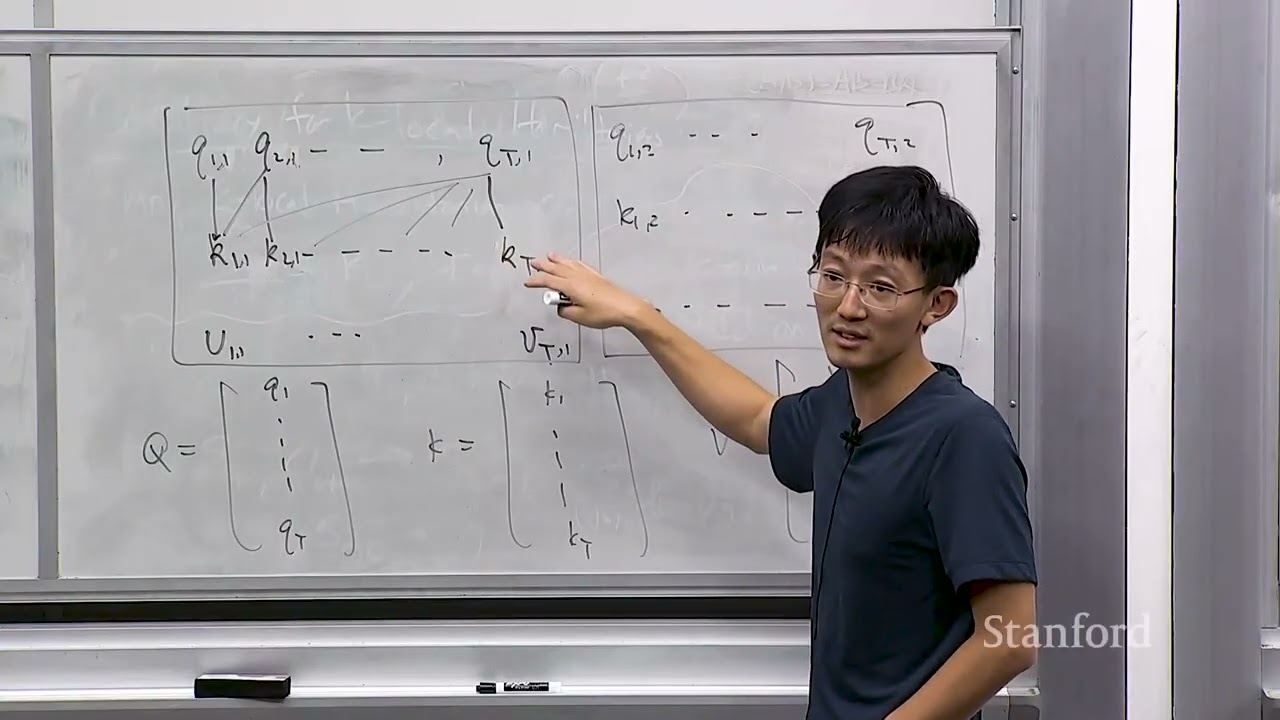
Stanford CS229 Machine Learning | Spring 2026 | Lecture 14: Transformers, In-Context Learning Jul 31, 2026 · 1:17:32 This deep dive covers LLMs, focusing on the Transformer architecture. Key topics include subword tokenization, auto-regressive modeling, and the self-attention mechanism using Q, K, V vectors.

Build context

Stanford CS229 Machine Learning | Spring 2026 | Lecture 16: Basic Concept in RL, Policy Gradient Jul 31, 2026 · 1:13:19 The lecture reviews advanced Transformer optimizations, covering Grouped Query Attention (GQA) to reduce KV cache memory and Mixture of Experts (MoE) for scaling parameters while controlling compute. It also details In-Context Learning and SFT. Deep dive on LLM Inference at Scale — Harshul Jain, Audible & Tanmay Sah, Independent AI Researcher Sep 8, 2026 · 1:28:12 This deep dive covers LLM inference optimization at scale, detailing how memory and compute costs are managed through techniques like Paged Attention, Continuous Batching, and model quantization. Stanford CME295 Transformers & LLMs | Autumn 2026 | Lecture 1 - Transformers Sep 28, 2026 · 1:44:28 The Transformer architecture revolutionized NLP by replacing recurrent connections with self-attention. This mechanism allows tokens to compute context-aware representations by weighing the relevance of all other tokens in the sequence.

Recent signals

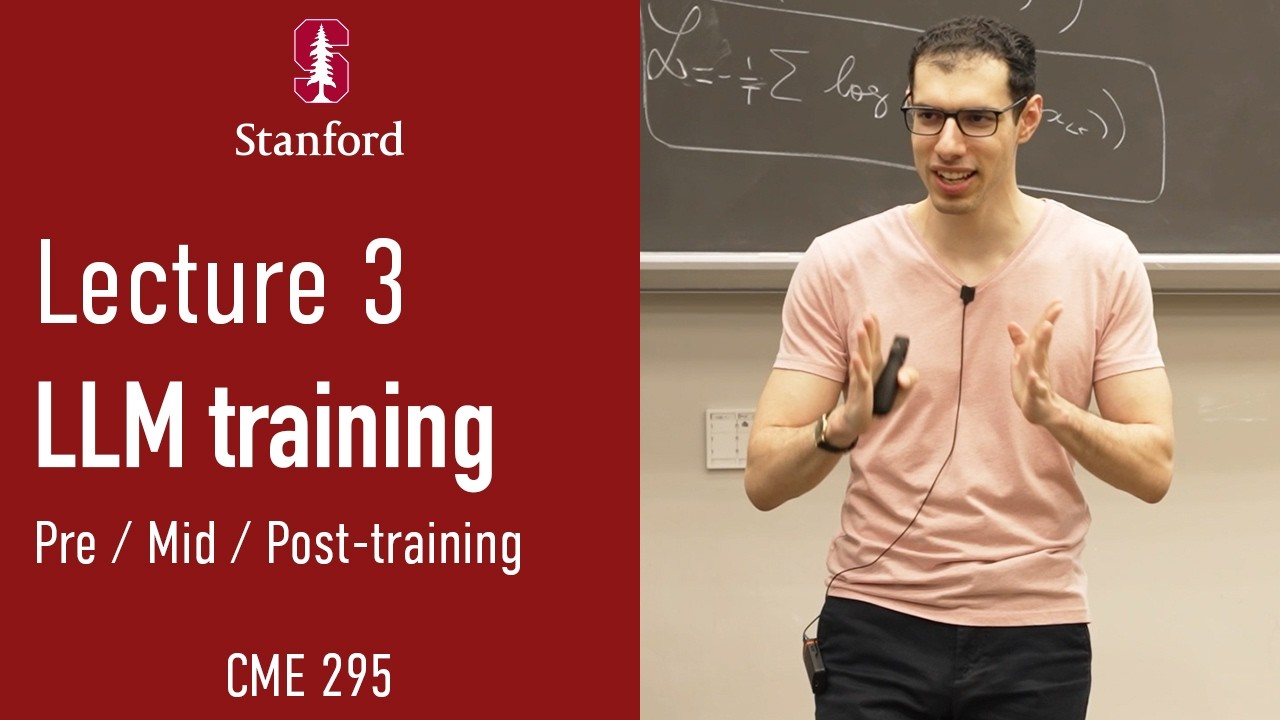
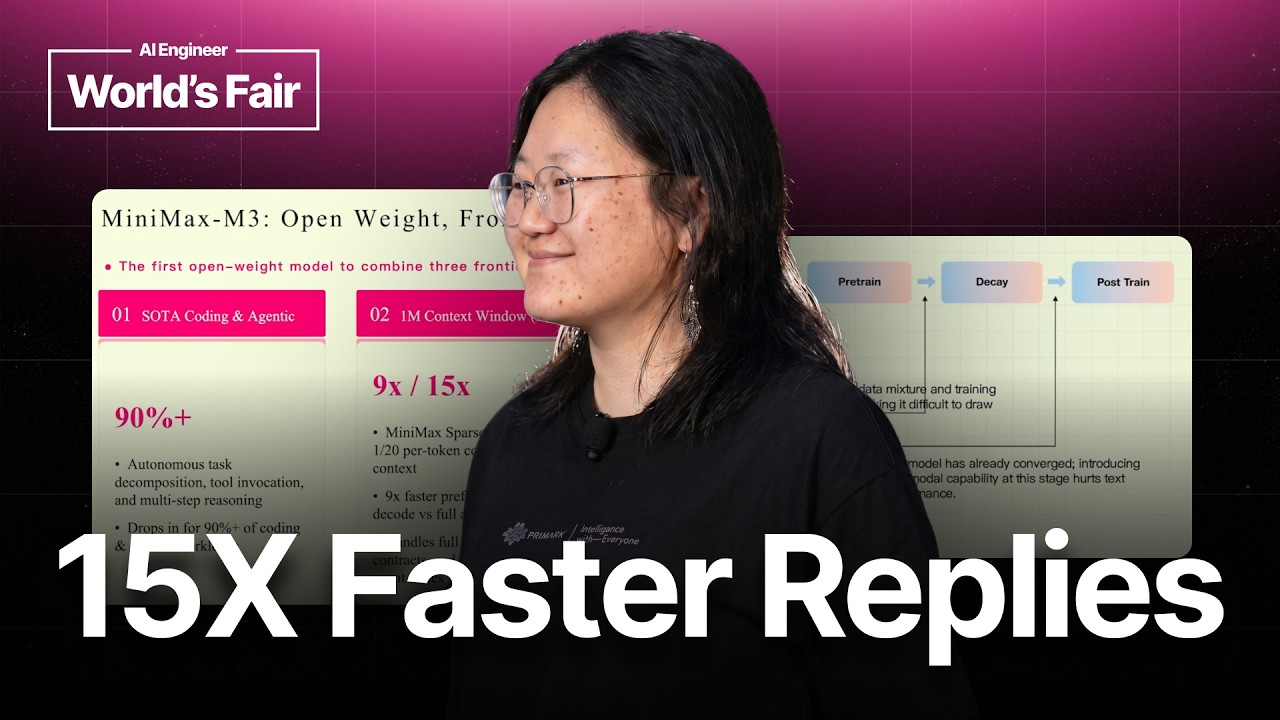
A Bank Trained Its Own Foundation Model to Catch Fraud — Freddy Lecue, Wells Fargo Oct 23, 2026 · 17:40 Wells Fargo built a proprietary Foundation Model for transactions, pre-training a transformer on billions of raw customer transactions. This single backbone model improves fraud detection and streamlines multiple downstream financial tasks. Stanford CME 295 Transformers & LLMs | Fall 2026 | Lecture 3 - LLM training Oct 15, 2026 · 1:44:32 The lecture details the full LLM lifecycle, covering pre-training (next token prediction), SFT (behavior alignment), and advanced alignment techniques like DPO and RLHF. Key engineering concepts include LoRA for parameter efficiency and RoPE interpolation for long context handling. How MiniMax M3 Was Built: Sparse Attention and Native Multimodality — Olive Song Oct 10, 2026 · 15:03 MiniMax M3 combines agentic coding, 1M context, and native multimodality. The model uses MSA sparse attention, achieving 9x faster pre-fill and 15x faster decode vs. full attention.

Browse view