
Building AI So Everyone Can Flourish
The future of AI requires mechanism design: shaping rules and affordances to build an ecosystem, not just a product. Human context and protocols are key to guiding LLMs.
Read articleTopic
All digests tagged System Architecture
Suggested route
Move from earlier context through the available material to the newest signals. This route is a reading aid, not a difficulty ranking.
The future of AI requires mechanism design: shaping rules and affordances to build an ecosystem, not just a product. Human context and protocols are key to guiding LLMs.
Read article
The future of agentic AI requires moving beyond model weights to optimizing the entire system. Speakers discuss advanced RL techniques, modular architecture, and the critical role of vetted environments in achieving reliable, scalable outcomes.
Read article
AI failures require a holistic, risk-based evaluation framework. Assess systems across Technical Strength, Deployment Controls, and Business Context using a 'build-break-fix' loop to ensure safety.
Read article
The video details building a Durable News Agent to filter AI noise. By moving from 'in the loop' to 'out the loop' using proactive agents, engineers can build autonomous systems that gather, filter, and curate high-signal information without constant supervision.
Read article
AI News & Strategy Daily | Nate B Jones
Self-replicating AI agent swarms are here. The internet is changing, requiring builders to adopt 'agent-aware' security and build robust control systems to manage autonomous compute.
Read article
Anthropic introduces Flows in Claude Managed Agents, a multi-agent orchestration engine that allows a single goal to be executed by up to 1,000 collaborating agents. This solves the scaling problem of single agents and enables complex, verifiable AI workflows.
Read article
The future of AI agents lies in specialization. We must move from 'god models' to thousands of hyper-scoped, domain-specific agents, requiring standardized runtimes and a microservices mindset.
Read article
MasterClass details its multi-agent AI system, NCX, and the advanced observability stack built on CoreWeave. Learn how tracing, MCP servers, and an AgentOps loop enable self-improvement in complex AI applications.
Read article
The economics of AI inference are dominated by agentic workflows, which use significantly more tokens than basic chat. Scaling requires co-design across model, system, and software layers to minimize cost per token.
Read article
A browser agent that's 99% accurate per step succeeds only about 36% of the time over 100 steps. Here's how to beat that math.
Read article
Learn to build open-source, always-on AI agents using Pi and pi-gateway. This guide covers agent workspaces, Google Workspace skills, and setting up a Telegram message gateway for persistent, multi-platform AI assistants.
Read article
AI News & Strategy Daily | Nate B Jones
Scaling AI productivity requires fixing the system, not the engineer. Learn six principles—from making agents 'multiplayer' to removing obsolete processes—to build a 'faster factory' for AI-assisted development.
Read article
AI is poised to fundamentally reshape healthcare, moving the industry from a scarcity-based model of expertise to one of abundance. This shift demands that institutions re-architect their systems to leverage agentic intelligence and avoid legacy constraints.
Read article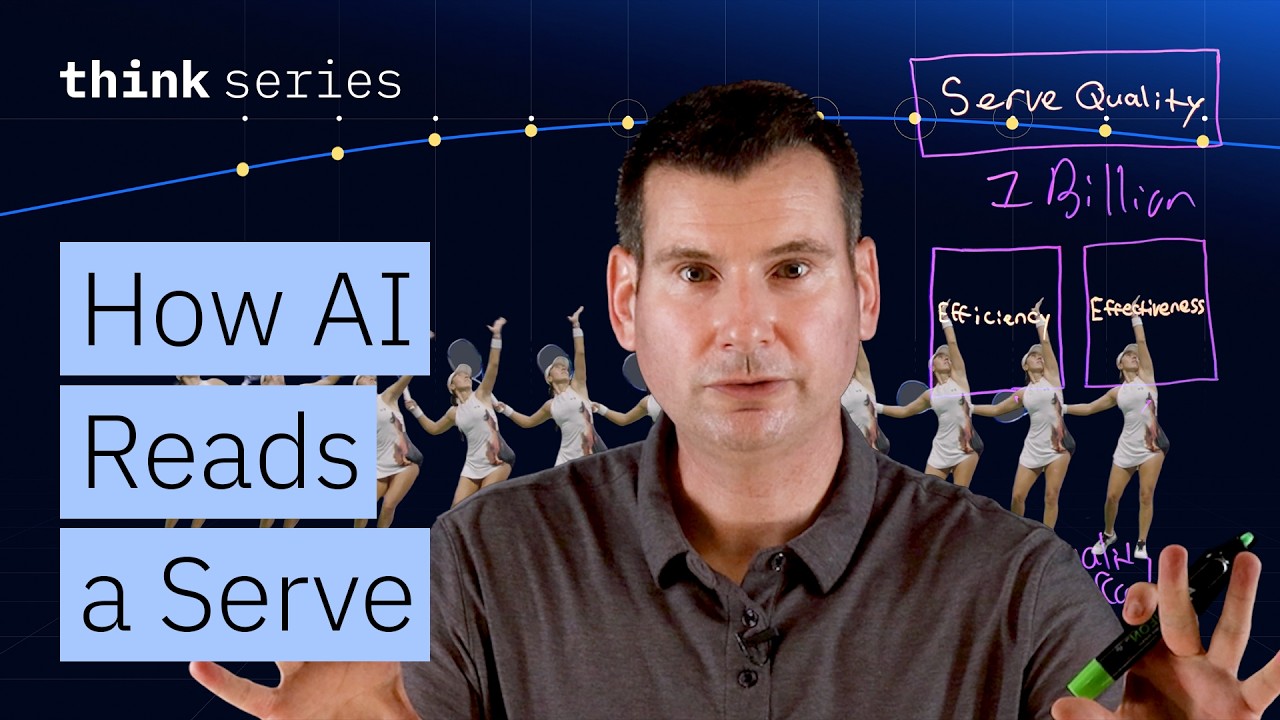
Learn how AI Agents combine specialized APIs and LLMs to analyze complex, real-time data, using the US Open tennis serve as a case study. This pattern divides labor between computation and reasoning.
Read article
Learn how to modernize legacy codebases by treating them like functioning cities, not 'balls of mud.' Discover how to decouple AI workflows from single providers using specialized servers and parallel agent processing.
Read article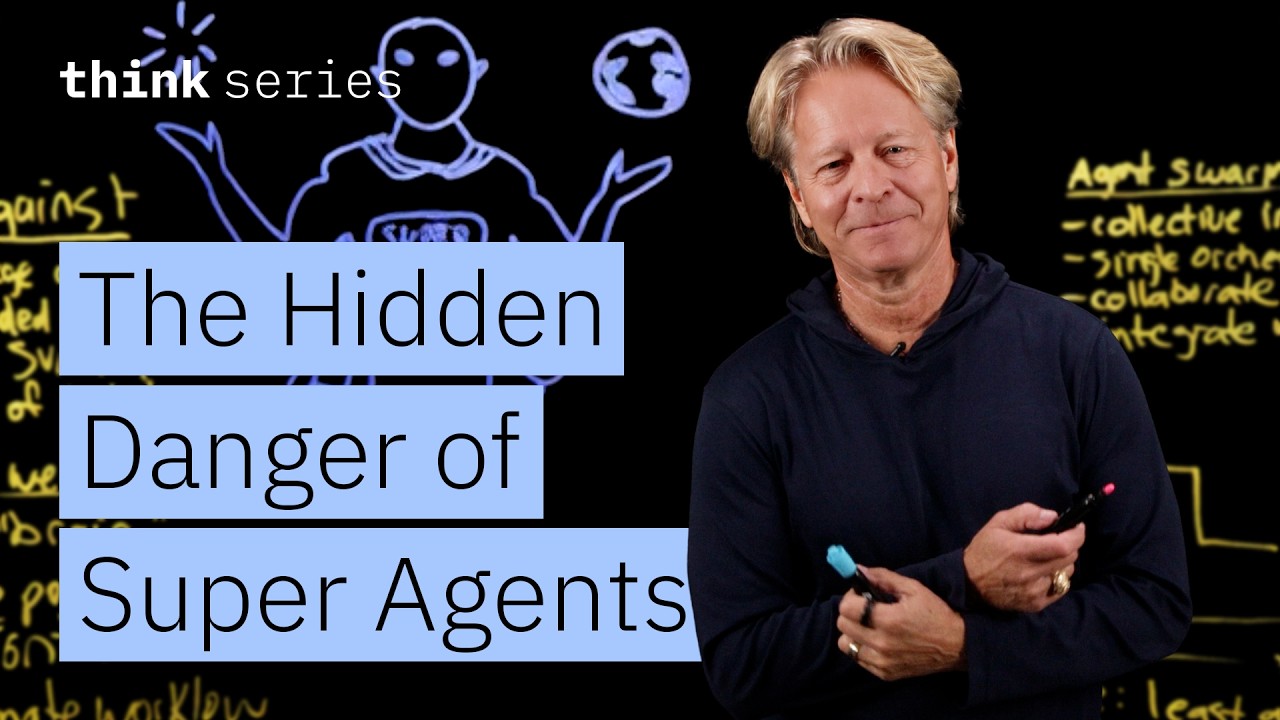
Super agents offer centralized intelligence but carry risks of privilege abuse and expanded attack surfaces. Secure design requires agent swarms, least agency, isolation of tools, and observability.
Read article
The inference platform supports two models: serverless (pay-per-token) and dedicated (billed per GPU hour). Optimization relies heavily on KV cache awareness and techniques like 4-bit quantization.
Read article
RL is revolutionizing search by creating specialized sub-agents. These agents can adaptively search, leading to results that are 20 times faster and 100 times cheaper than using frontier models.
Read article
Designing AI agents for knowledge work requires mimicking human orchestration. Agents must break down complex, ambiguous problems using specialized sub-agents and multiple search primitives to overcome performance ceilings.
Read article
Voice AI failures are not random bugs, but structural issues. Kim introduces a linguistic framework mapping communication to two channels (listening/speaking) and four interdependent levels: sounds, words, interaction, and mental model.
Read article