Topic

Software Development Lifecycle (SDLC)

All digests tagged Software Development Lifecycle (SDLC)

Suggested route

Topic journey

Move from earlier context through the available material to the newest signals. This route is a reading aid, not a difficulty ranking.

Start here

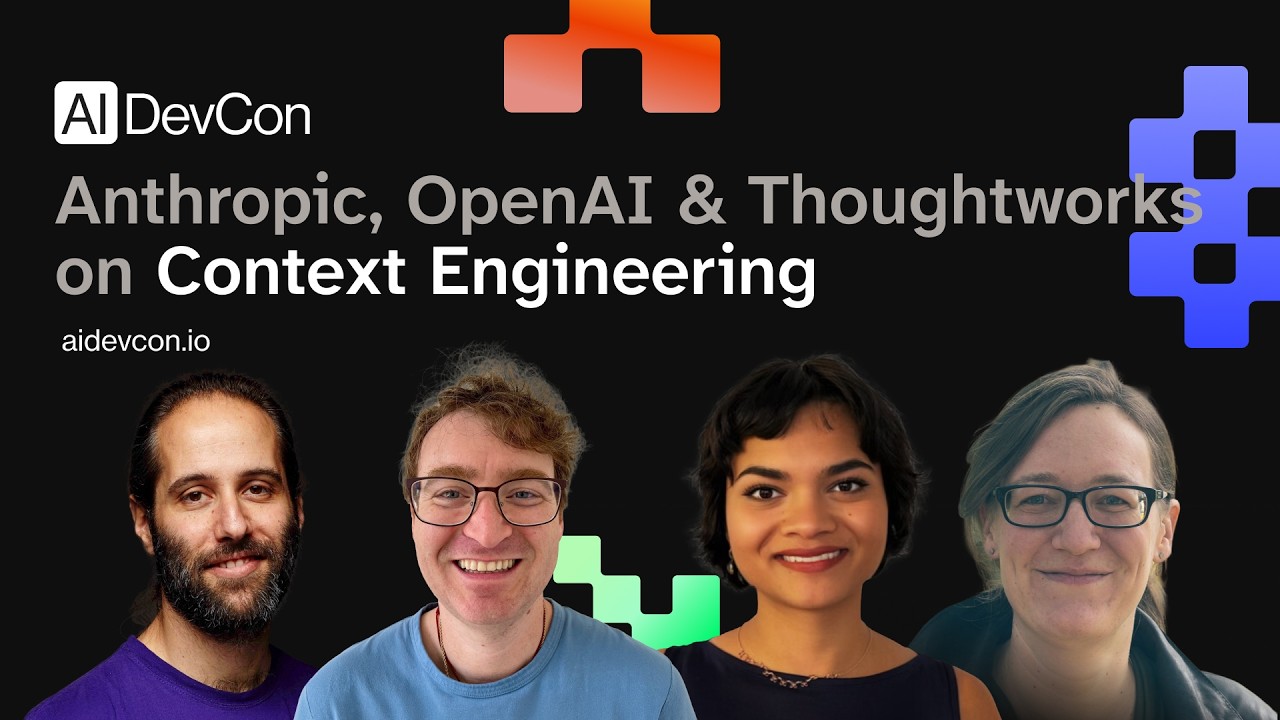
Anthropic, OpenAI & Thoughtworks on Context Engineering Aug 24, 2026 · 10:08 Context engineering is now the main lever on what a coding agent can actually do. The three remaining constraints are human time, attention, and the context window.

Build context

500 Skills, Zero Fine-Tuning: LinkedIn's Playbook for AI Agents — Ajay Prakash, LinkedIn Sep 9, 2026 · 20:25 Learn how LinkedIn scaled AI agents to thousands of tools and playbooks using a Search/Get Schema/Execute meta-tool layer, enabling reliable, context-aware automation. Meta, Stanford & Odevo on Agentic Coding at Scale Sep 9, 2026 · 10:10 Scaling agentic coding requires fixing fundamentals first: CI/CD, platform stability, and testing. The 2025 DORA report warns that agents make weak delivery worse. The Hidden 50% Drop in AI Agents Following Your Rules Sep 21, 2026 · 29:18 The use of static instruction files like AGENTS.md is degrading, leading to a 50% drop in agent adherence. To regain control, build engineers must adopt structured rules and verification gates.

Recent signals

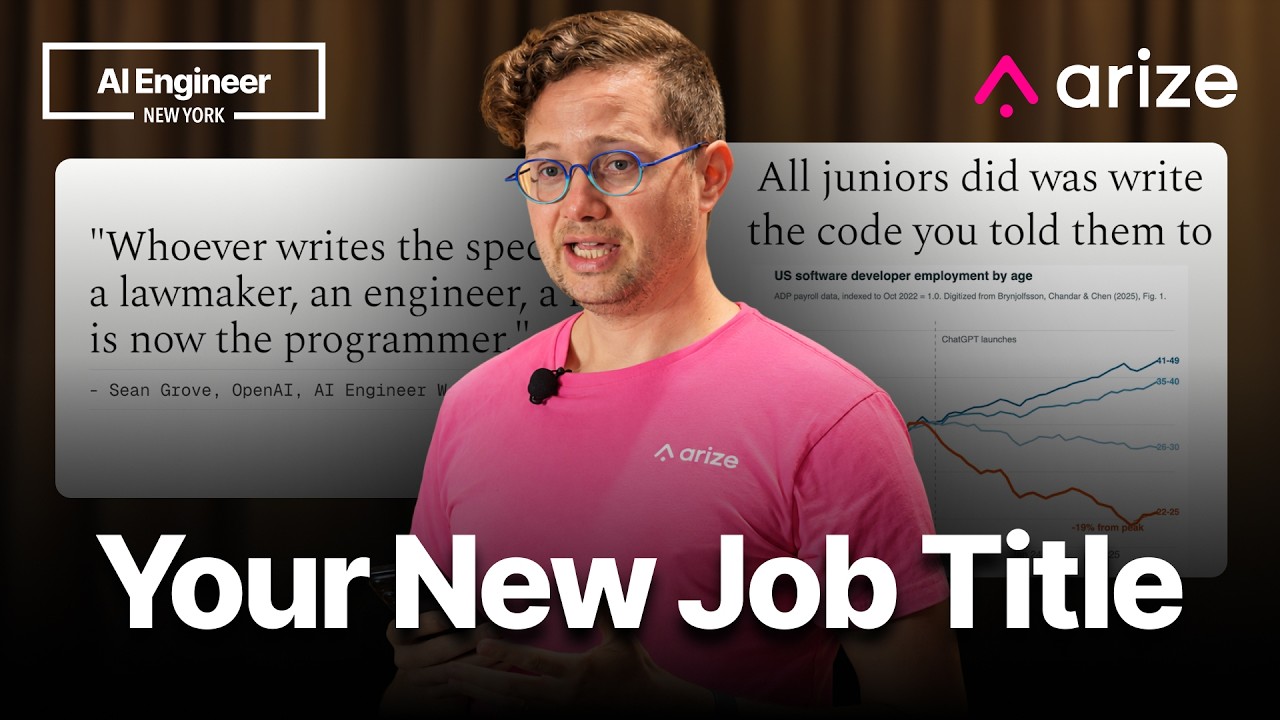
Simon Maple: Lessons From Running Tessl's Software Factory Oct 27, 2026 · 46:14 Learn how to build a fully autonomous 'Software Factory' using agent loops and feedback loops. Discover how to achieve 75% PR merge rates without human intervention, while maintaining cost control and model agnosticism. Agentic Engineering: 5 Terms Every AI Developer Should Know Oct 26, 2026 · 11:41 Agentic Engineering is the future of software development. Learn the five core concepts—Prompt, Context, Harness, Loop, and Graph Engineering—that power autonomous AI agents and automate the entire SDLC. What Does an AI Engineer Do Now? - Aparna Dhinakaran, Arize AI Oct 25, 2026 · 15:28 The AI Engineer role is shifting from writing features to building self-improving loops. This requires building always-on agents that consume telemetry, run in durable sandboxes, and are continuously tested using advanced evaluation systems.

Browse view