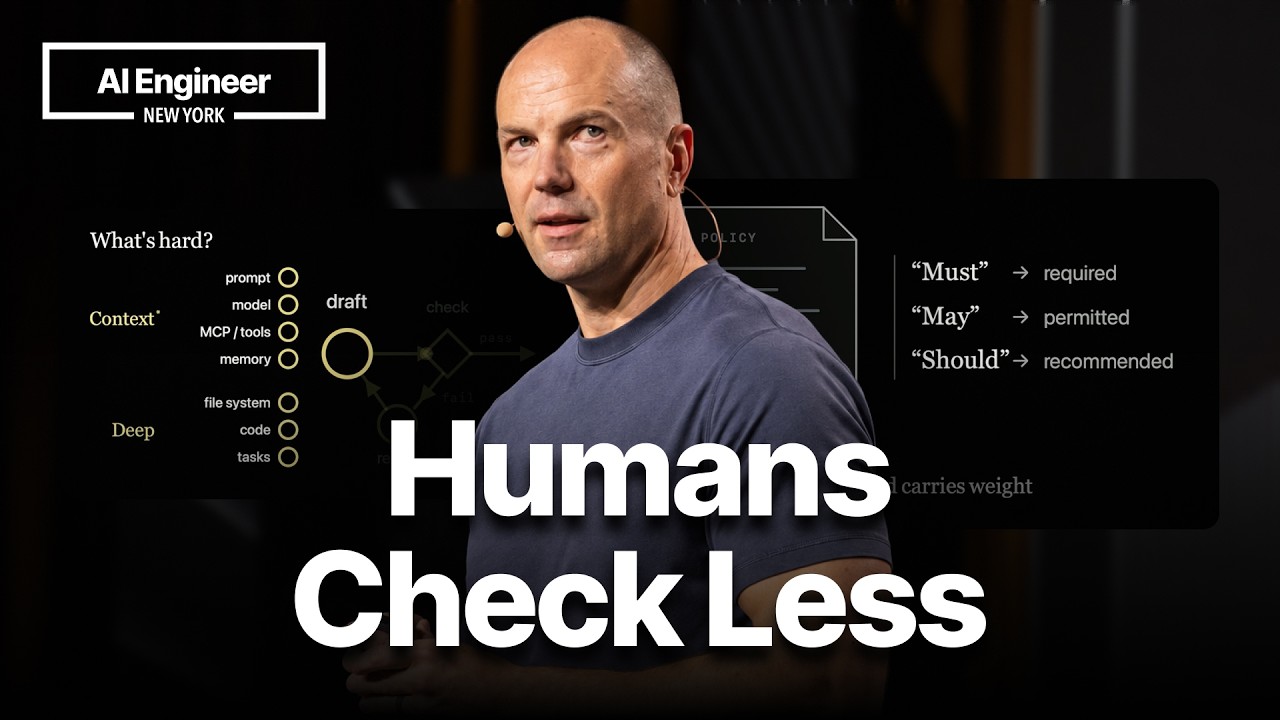
How to Know When an AI Agent Can Work Unsupervised — Evan Kormos, Coinbase
Learn how to integrate AI agents into regulated, policy-driven workflows. We model processes using DAGs and DCGs, establishing trust through Evals and Traces.
Read articleTopic
All digests tagged AI Agents
Learn how to integrate AI agents into regulated, policy-driven workflows. We model processes using DAGs and DCGs, establishing trust through Evals and Traces.
Read article
Loop engineering designs systems where AI agents iteratively prompt, observe, and adjust toward a measurable goal. This process requires managing context, tools (MCP/APIs), and persistent state (spine).
Read article
Exa Snapshot allows users to version-control web search, enabling the backtesting of AI agents and predictive models against the web as it existed on a specific past date. This mitigates look-ahead bias.
Read article
AI News & Strategy Daily | Nate B Jones
Self-replicating AI agent swarms are here. The internet is changing, requiring builders to adopt 'agent-aware' security and build robust control systems to manage autonomous compute.
Read article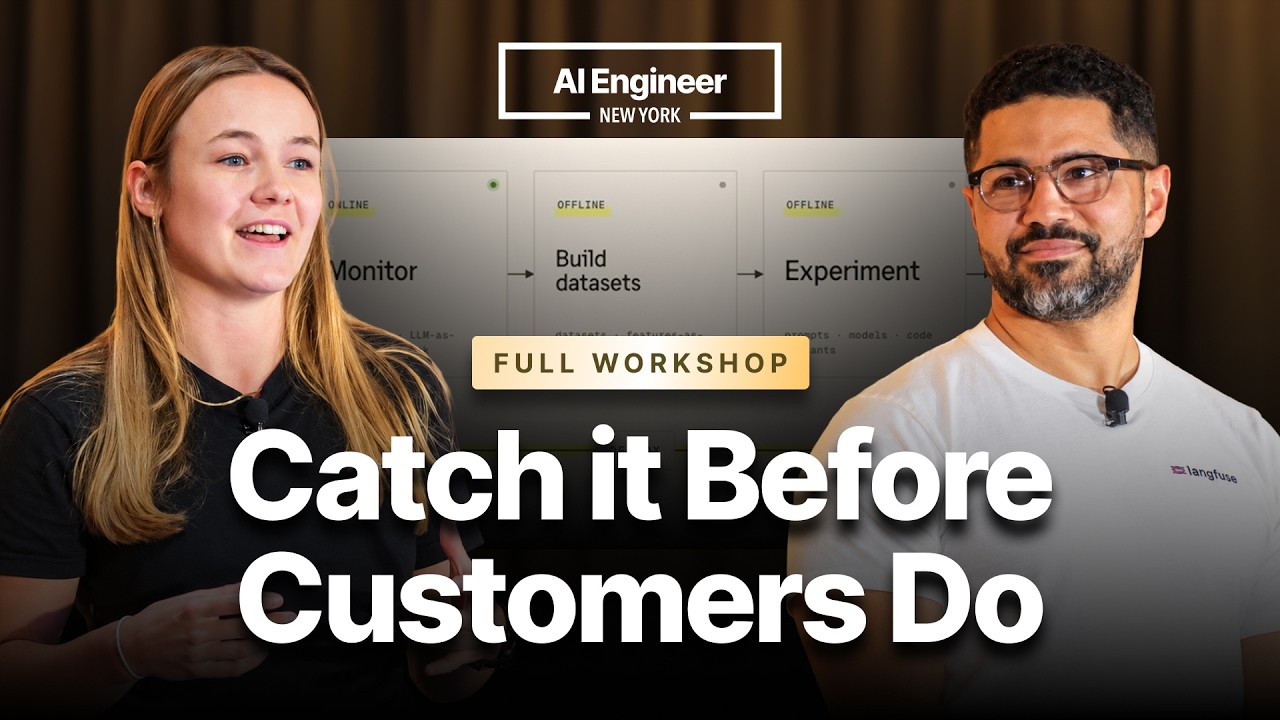
Learn how to build reliable AI agents for high-stakes environments. We cover the AI Engineering Loop: tracing, dataset curation, and integrating automated evaluation (Evals) into your CI/CD pipeline to prevent regressions.
Read article
The panel explores why OAuth is insufficient for autonomous AI agents. The solution lies in 'intent-based authorization,' which uses mission context and architectural separation (brain vs. hands) to manage risk.
Read article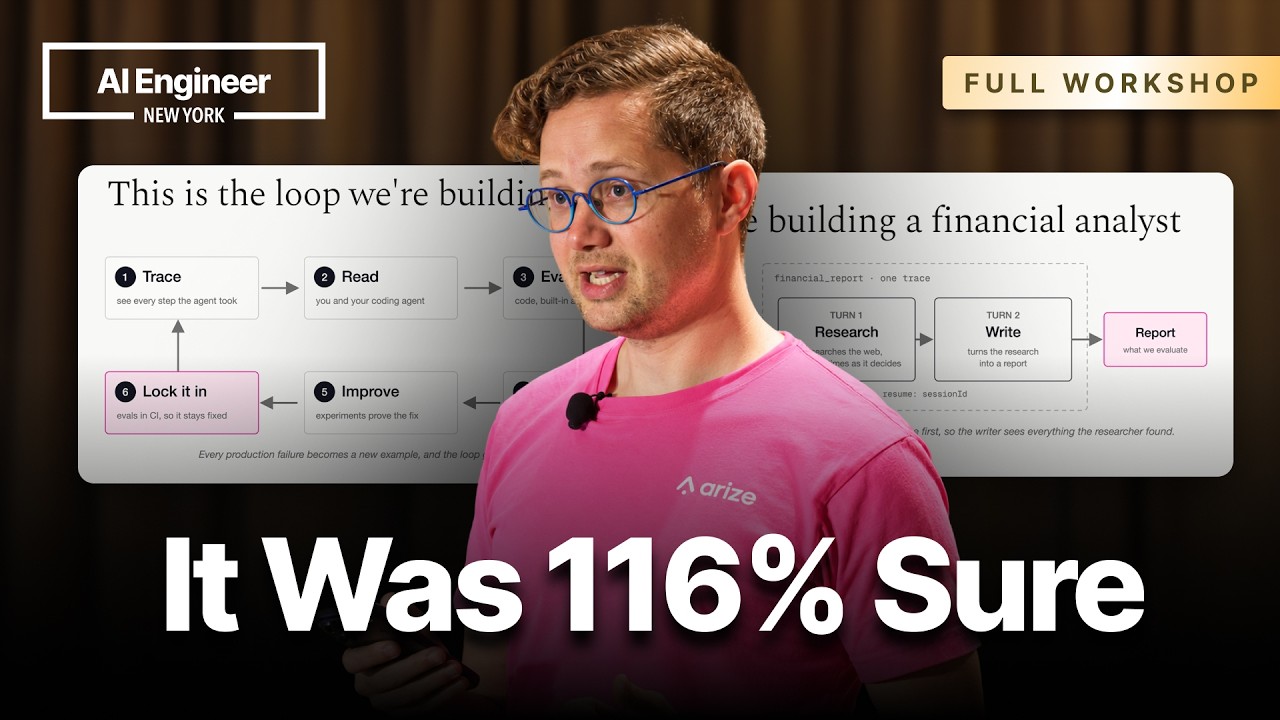
Evals are running tests on traces. They are essential because agents are non-deterministic, meaning the same prompt can give different answers. This process allows teams to measure reliability and prove that changes actually improve the agent.
Read article
The agent harness is the critical layer for building autonomous AI agents. By focusing on memory, context engineering, and tool management, engineers can make significant gains regardless of the underlying LLM model.
Read article
AI agents are shifting from complex coding tasks to proactive 'assistance.' Engineers must focus on durable state management, structured output (Jev), and centralized connection gateways to build reliable, production-grade AI tools.
Read article
AI agents are cutting 3-day portfolio builds to minutes in structured credit. Learn how Apollo is building AI-native platforms to automate complex, fragmented financial data reconciliation.
Read article
The panel discusses the 'cambrian explosion' of decision models, which bypass LLMs' auto-regressive loop for faster, programmatic classification. They also debate the efficiency limits of multi-agent systems.
Read article
AI News & Strategy Daily | Nate B Jones
REA (Reverse Engineer Anything) is a tool that plugs into AI agents (Claude/Codex) to open up software on your computer and show you how it's actually built. It bridges the gap between business requirements and technical implementation.
Read article
Context engineering is crucial for AI agents. Learn about context rot and four failure modes—Poisoning, Distraction, Confusion, and Clash—and how to improve agent reliability by deliberately pruning context.
Read article
The shift to agentic software requires building 'Software Factories' that prioritize quality and reliability. Key architectural components include DAG-based workflow modeling, layered security defenses, and optimizing for 'operating capability' over raw compute power.
Read article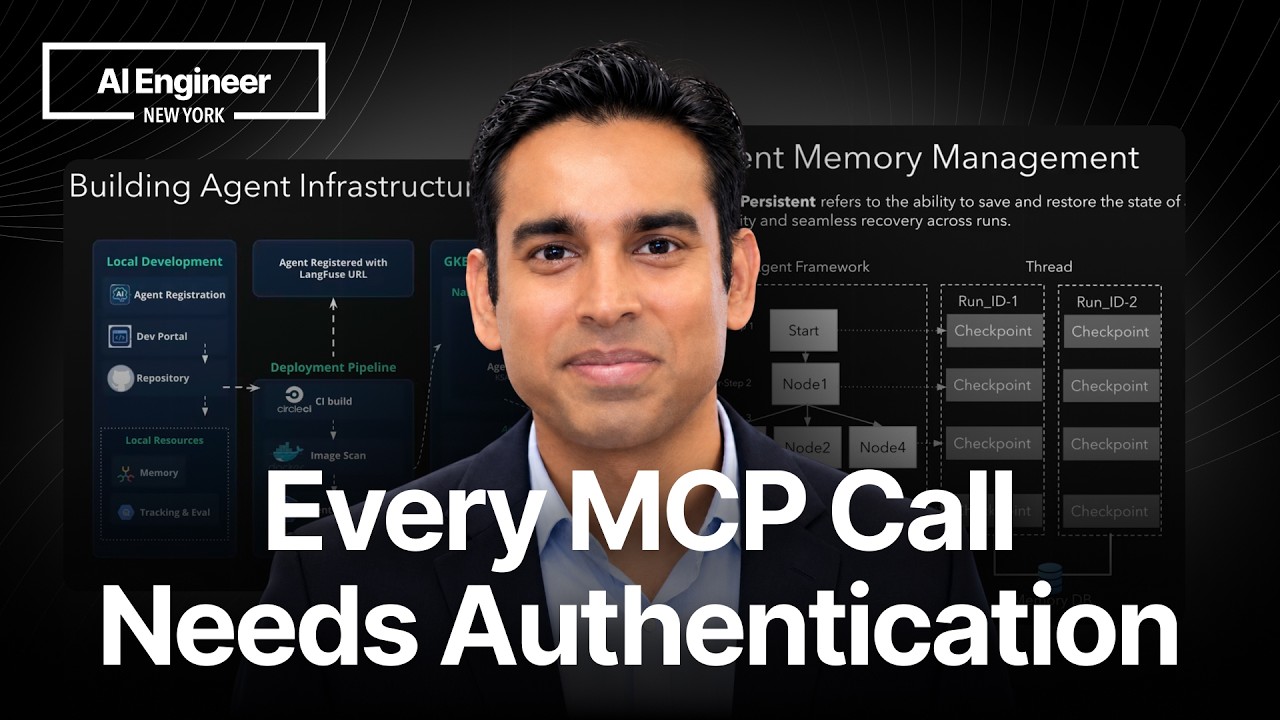
Transitioning AI agents to production requires a governed framework. Learn how to implement centralized MCP Gateways, LangGraph workflows, and robust CI/CD pipelines for secure, scalable, and observable enterprise AI.
Read article
Agentic workflows fundamentally change AI compute workloads, requiring new benchmarking methods that measure throughput per megawatt, interactivity, and end-to-end latency.
Read article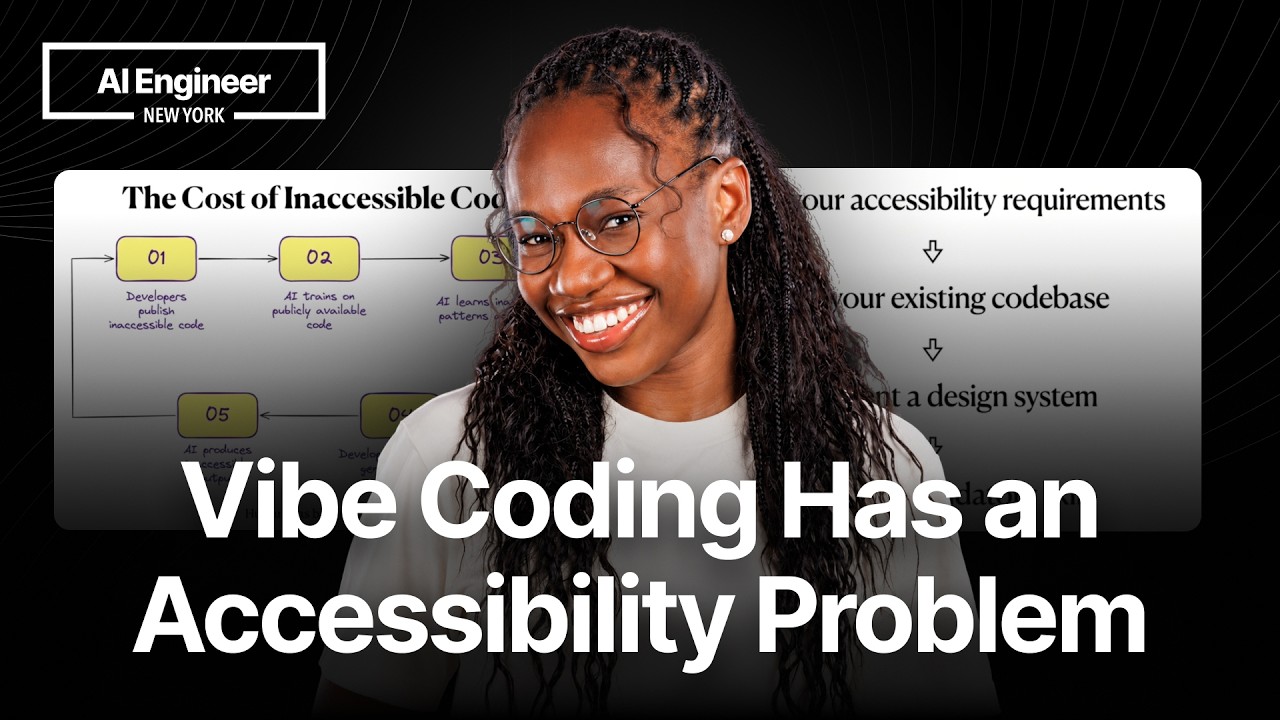
Accessibility must be a core requirement from the start. AI agents are powerful, but they require mandatory skills and guidance to prevent inheriting biases and generating verbose, non-semantic code.
Read article
The future of AI engineering involves building robust, governed agent frameworks. Key architectural components include a centralized data vault, a five-layer agent lifecycle, and continuous evaluation loops to manage non-deterministic behavior.
Read article
The future of enterprise AI lies in long-running agents that automate document workflows. We explore the advanced document context layer, covering specialized OCR, agent harnesses, and optimizing models for cost and accuracy.
Read article
Can AI agents kill expensive SaaS? We tested it by cloning a $43K/yr event management tool. Discover what mixed models, guardrails, and human domain expertise are required to build (and own) the next generation of business software.
Read article