Topic

LLM Evaluation (Evals)

All digests tagged LLM Evaluation (Evals)

Suggested route

Topic journey

Move from earlier context through the available material to the newest signals. This route is a reading aid, not a difficulty ranking.

Start here

How Evals and Prompts Shape Agent Behavior — Preetika Bhateja & Daniel Bump, YouTube Ads Jul 24, 2026 · 19:29 Building reliable AI agents requires a comprehensive evaluation loop that extends far beyond prompt engineering. The process involves optimizing foundational tools, establishing rigorous evaluation workflows (Evals), and iteratively refining behavior using feedback signals.

Build context

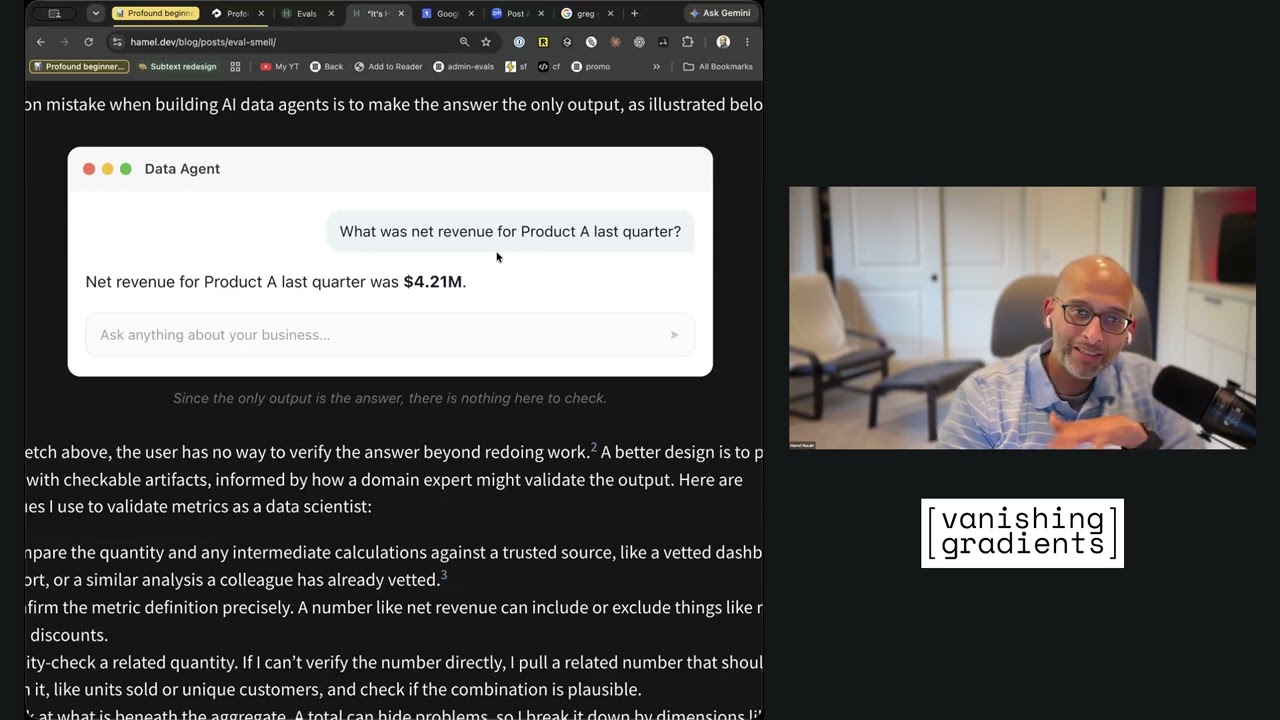
How to Design a Data Agent People Can Verify Sep 22, 2026 · 6:47 Building trustworthy AI agents requires more than just an answer. The product must be designed to show its work, providing full data provenance, SQL queries, and intermediate calculations for expert verification. Can One Model Run Your App And Evals? Oct 15, 2026 · 3:16 Can you use the same LLM for both your agent and your judge? The answer is usually yes. Focus on achieving strong alignment with human labels, as this is the most critical factor for successful AI product evaluation.

Recent signals

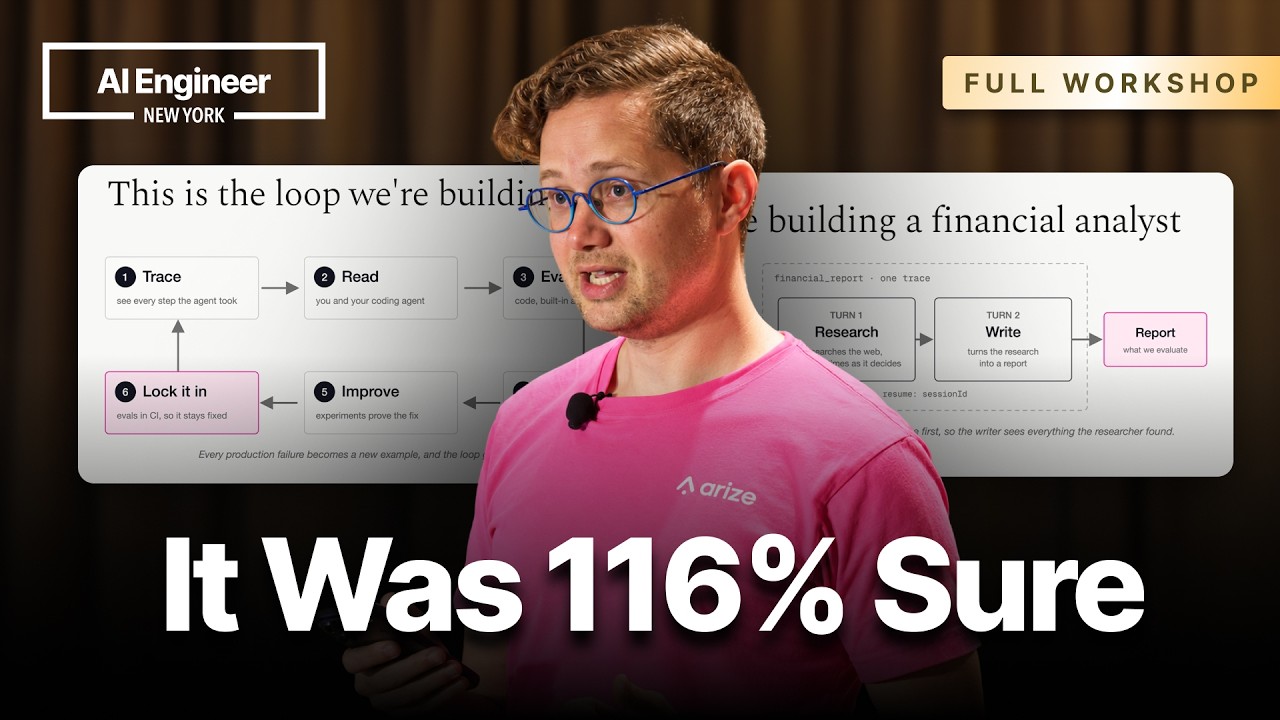
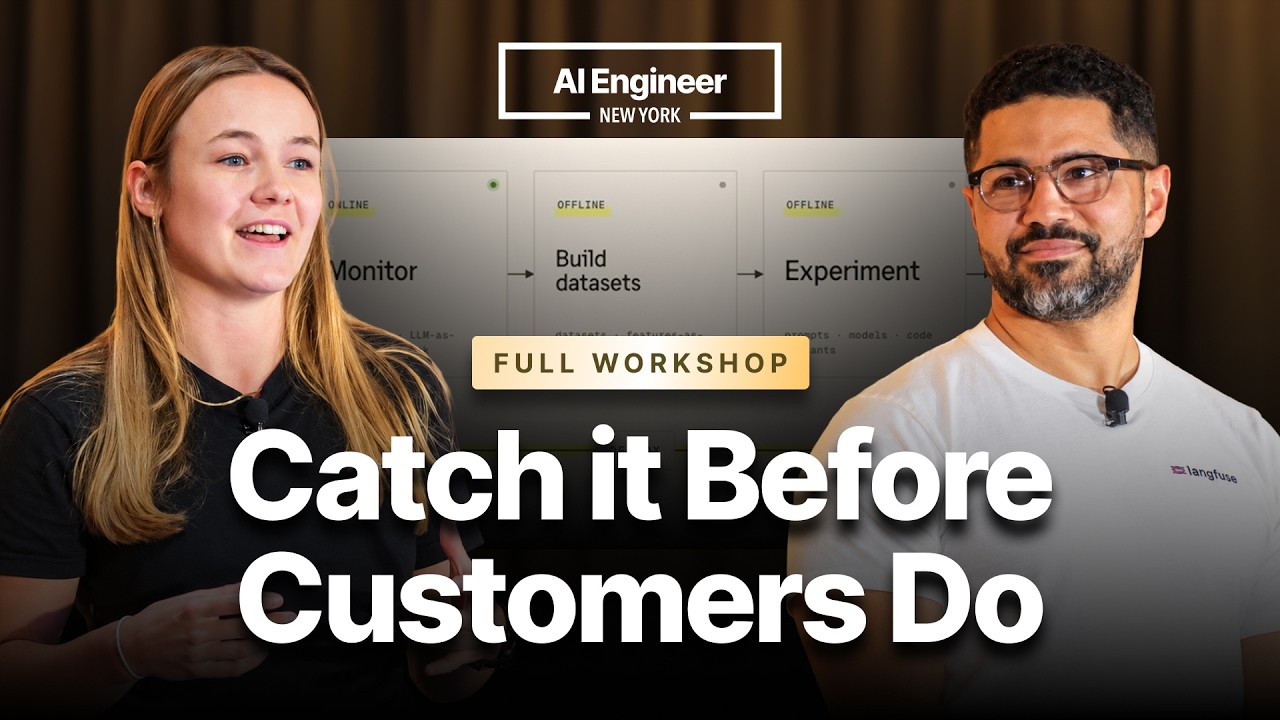
Evals for High-Stakes AI Agents — Doneyli De Jesus & Annabell Schäfer, Langfuse Oct 18, 2026 · 53:32 Learn how to build reliable AI agents for high-stakes environments. We cover the AI Engineering Loop: tracing, dataset curation, and integrating automated evaluation (Evals) into your CI/CD pipeline to prevent regressions. Teach Your Agent to Prove It's Done — Nick Nisi & Zack Proser, WorkOS Oct 18, 2026 · 1:01:04 Trusting AI agents requires more than just code. WorkOS demonstrates how to build robust verification loops using CLI health checks, browser snapshots, and LLM judges. Learn to make your agents self-correct and prove their work is done. How to Know If Your AI Agent Is Any Good: Evals With Phoenix & Claude — Laurie Voss, Arize AI Oct 17, 2026 · 1:56:13 Evals are running tests on traces. They are essential because agents are non-deterministic, meaning the same prompt can give different answers. This process allows teams to measure reliability and prove that changes actually improve the agent.

Browse view