
The Investor's Edge Lives in Their Head — Anekha Sokhal, Moshi
The most valuable context in finance isn't in a database, but in the investor's head. AI should augment human judgment, not replace it, by handling the data grind.
Read articleChannel
Digests from AI Engineer
The most valuable context in finance isn't in a database, but in the investor's head. AI should augment human judgment, not replace it, by handling the data grind.
Read article
Agentic finance is powered by the HTTP 402 standard (x402), enabling machine-to-machine commerce. The shift from ad-based revenue to microtransactions is redefining online payments.
Read article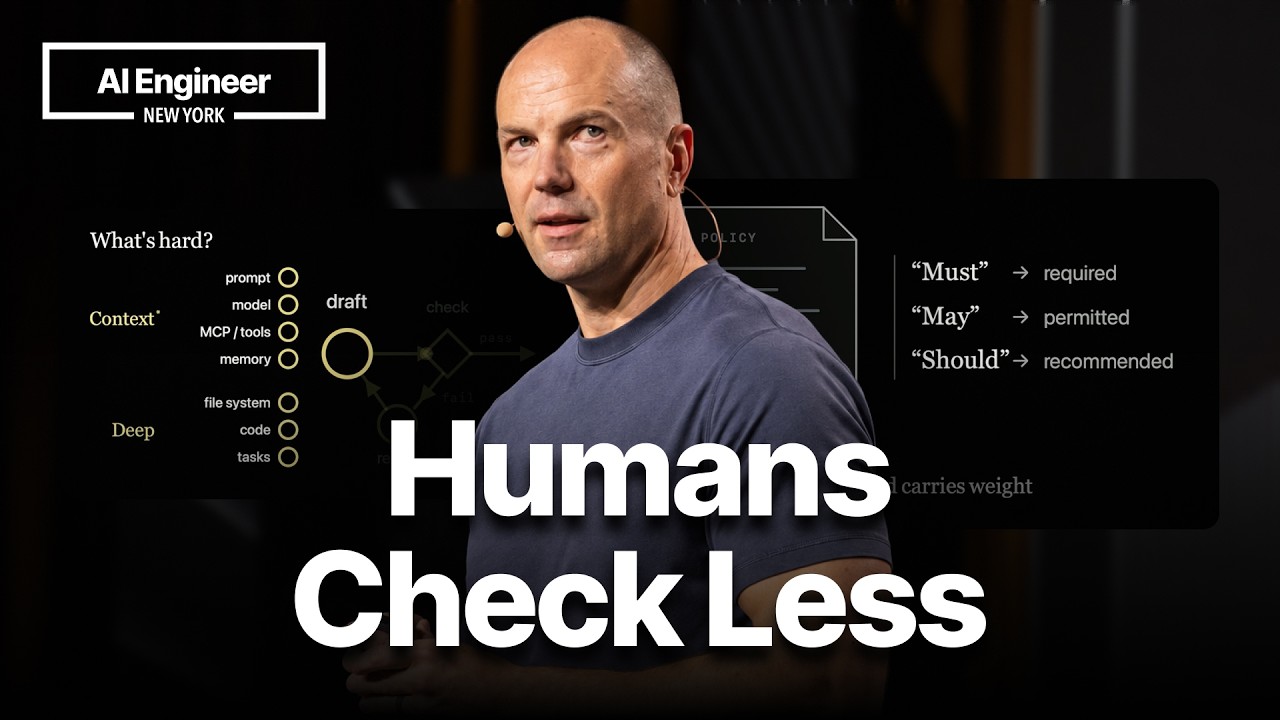
Learn how to integrate AI agents into regulated, policy-driven workflows. We model processes using DAGs and DCGs, establishing trust through Evals and Traces.
Read article
Is the agent harness dead? Jediah Katz explains that while models are absorbing coding skills via the data flywheel, the harness remains critical for infrastructure, security, and unlocking new, non-coding frontiers.
Read article
This workshop compares GPT-5.5, Kimi, DeepSeek, and Mistral across complex scenarios like RAG, tool calling, and vision. Learn how to use ASSERT and DSPy to automate model evaluation and optimize prompts for portability.
Read article
Acquiring established service businesses and transforming them with AI is a superior strategy to selling AI tools externally. This 'inside-out' approach leverages existing trust and deep operational data to achieve true P&L impact.
Read article
Exa Snapshot enables version-controlled search, allowing agents to search the web as it existed on any past date. This is critical for backtesting predictive signals and preventing model overfitting.
Read article
Exa Snapshot allows users to version-control web search, enabling the backtesting of AI agents and predictive models against the web as it existed on a specific past date. This mitigates look-ahead bias.
Read article
The speaker analyzes the agent payment funnel, detailing why protocols like x42 and MPPP are struggling to gain volume. He argues that convenience (API keys) currently beats complexity (crypto setup), and variable billing is key.
Read article
OpenProse defines multi-agent workflows as declarative contracts in plain markdown. This framework enables event-driven, auditable automation for tasks like PR reviews and quant model documentation.
Read article
Insurance claims are messy, unstructured data nightmares. Learn how AI, combined with robust data pipelines and cross-claim analysis, can transform the industry and solve the biggest data barriers.
Read article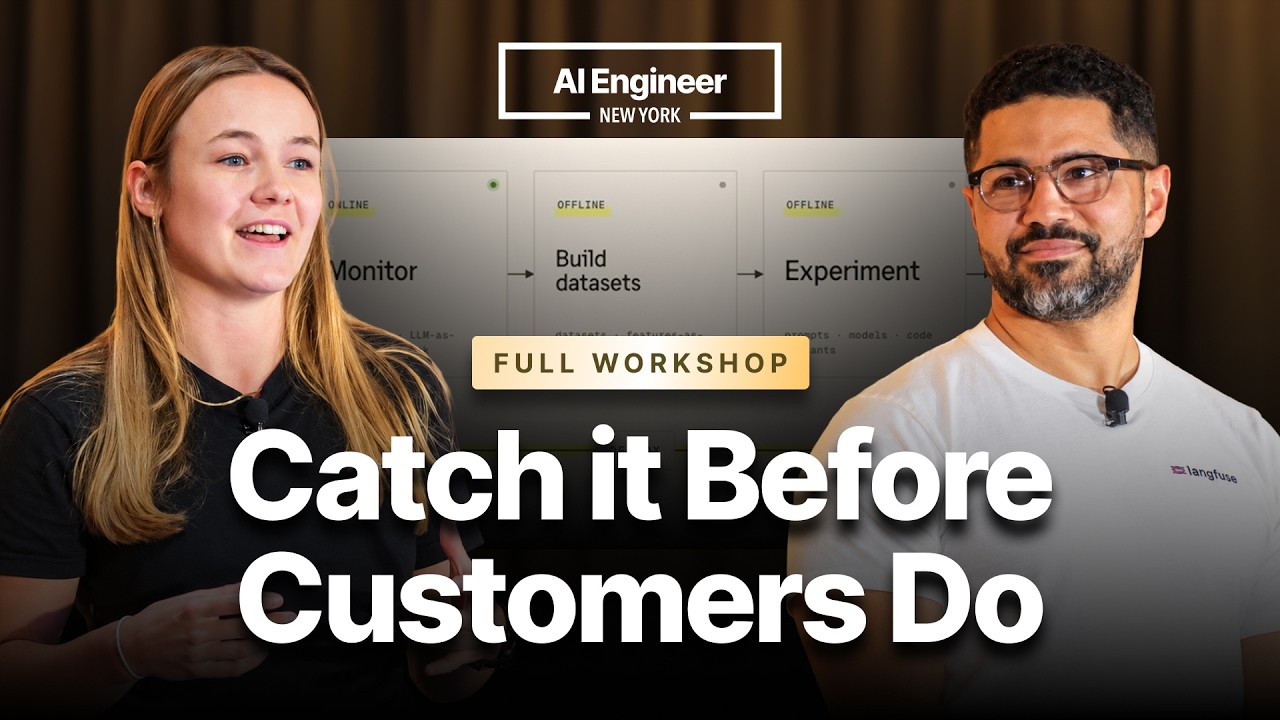
Learn how to build reliable AI agents for high-stakes environments. We cover the AI Engineering Loop: tracing, dataset curation, and integrating automated evaluation (Evals) into your CI/CD pipeline to prevent regressions.
Read article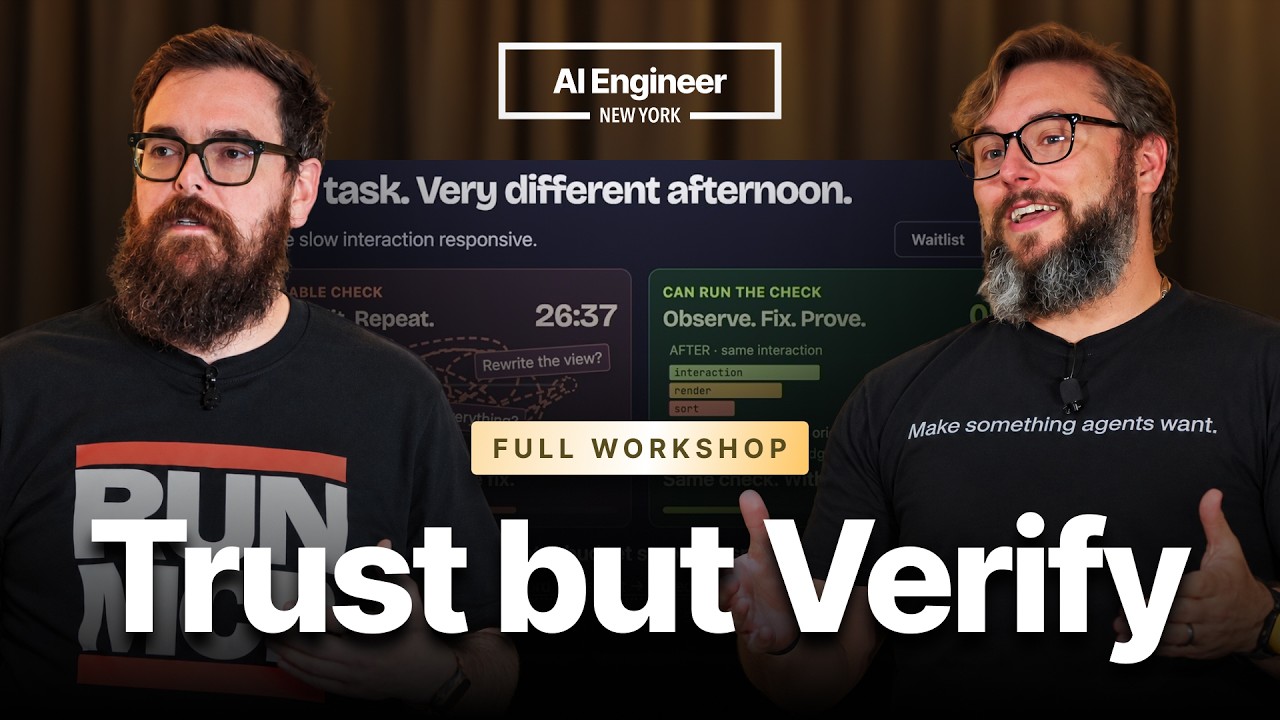
Trusting AI agents requires more than just code. WorkOS demonstrates how to build robust verification loops using CLI health checks, browser snapshots, and LLM judges. Learn to make your agents self-correct and prove their work is done.
Read article
The panel explores why OAuth is insufficient for autonomous AI agents. The solution lies in 'intent-based authorization,' which uses mission context and architectural separation (brain vs. hands) to manage risk.
Read article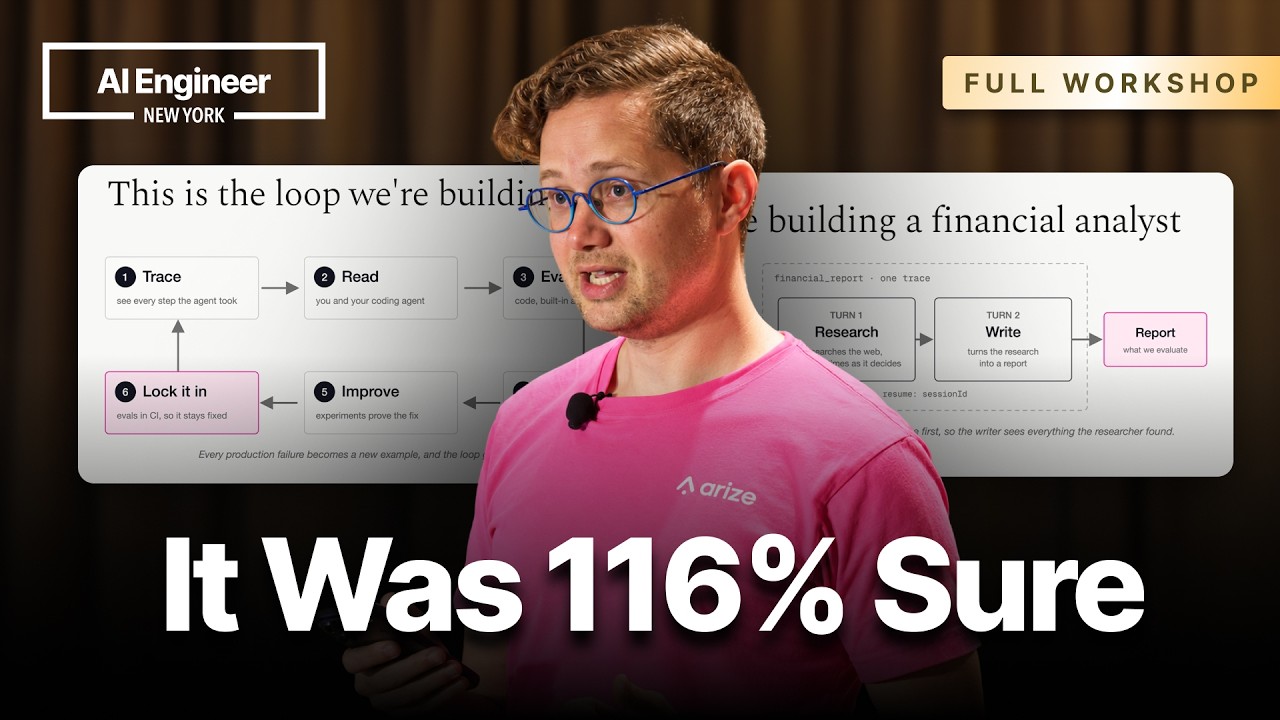
Evals are running tests on traces. They are essential because agents are non-deterministic, meaning the same prompt can give different answers. This process allows teams to measure reliability and prove that changes actually improve the agent.
Read article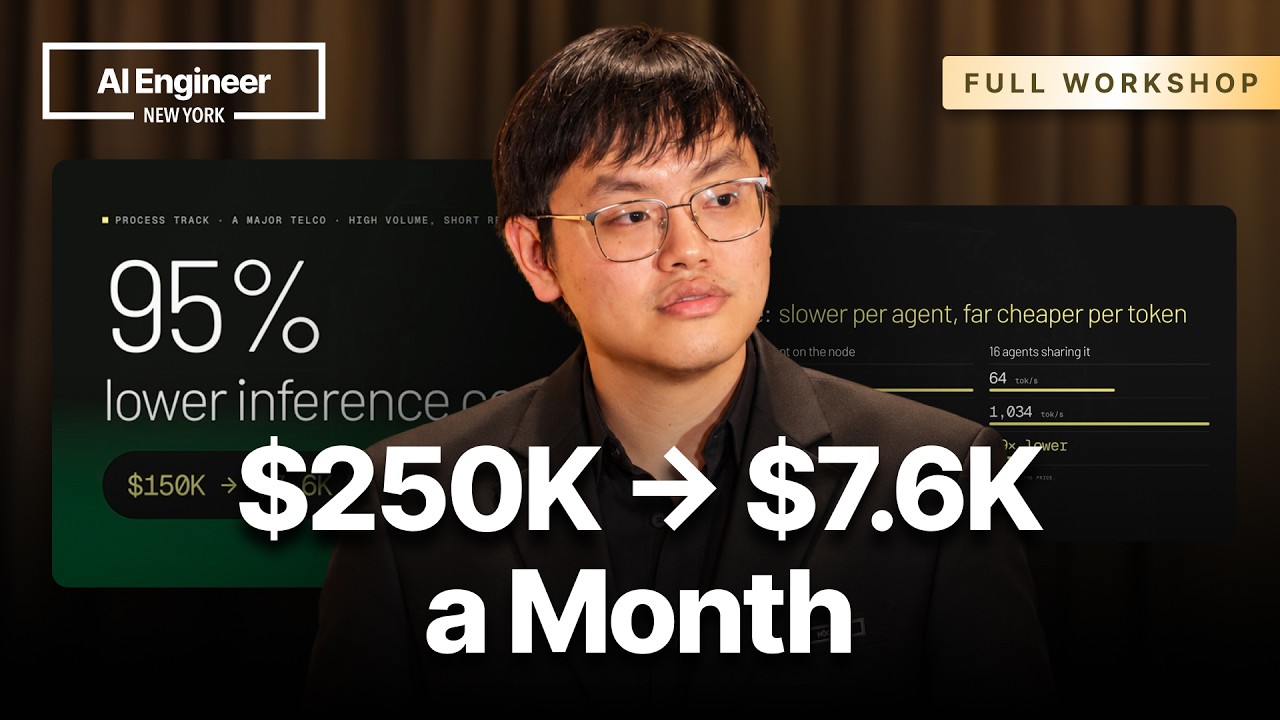
Learn how to cut massive AI inference costs at scale. Eugene Cheah outlines four moves: Measure, Right-size, Buy Capacity Well, and Check Processes to optimize your tokenomics.
Read article
The agent harness is the critical layer for building autonomous AI agents. By focusing on memory, context engineering, and tool management, engineers can make significant gains regardless of the underlying LLM model.
Read article
AI agents are cutting 3-day portfolio builds to minutes in structured credit. Learn how Apollo is building AI-native platforms to automate complex, fragmented financial data reconciliation.
Read article
Anthropic introduces Flows in Claude Managed Agents, a multi-agent orchestration engine that allows a single goal to be executed by up to 1,000 collaborating agents. This solves the scaling problem of single agents and enables complex, verifiable AI workflows.
Read article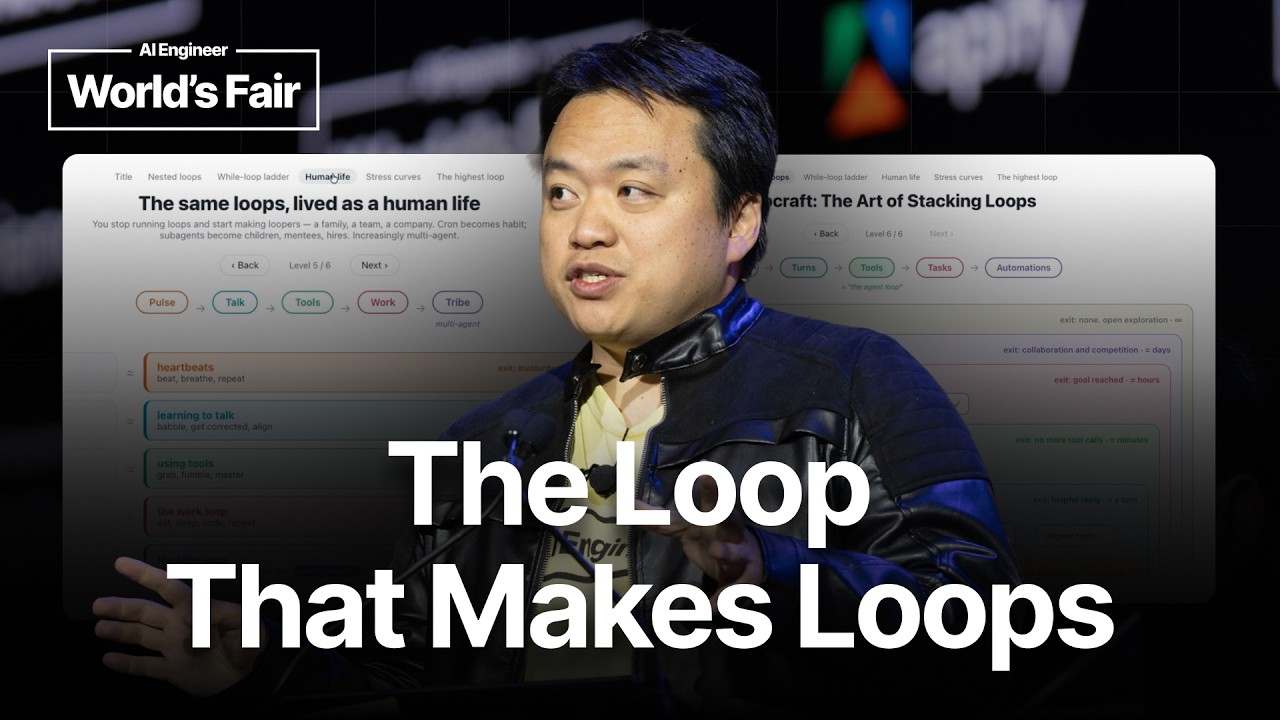
AI development is defined by 'loop stacking.' The core skill is understanding your operational loop level—scaling up for productivity or scaling down for reliability.
Read article