
Why 99% Accurate Browser Agents Still Fail — Derek Meegan, Browserbase
A browser agent that's 99% accurate per step succeeds only about 36% of the time over 100 steps. Here's how to beat that math.
Read articleTopic
All digests tagged AI Agents
A browser agent that's 99% accurate per step succeeds only about 36% of the time over 100 steps. Here's how to beat that math.
Read article
Kimchi is an open-source coding harness that optimizes LLM usage by measuring cost per task, not cost per token. It features Ferment for autonomous, milestone-based coding and Teleport for remote, continuous agent sessions.
Read article
Exa explains how they built search for coding and review agents, addressing the critical issue of LLM knowledge cutoffs. They provide context-rich highlights by distilling massive documents into small, highly relevant snippets for the LLM.
Read article
AI agents are 'blind,' not stupid. The fix is context engineering at the data layer, requiring federation and logical views to unify data from sources like Kafka and Iceberg.
Read article
AI News & Strategy Daily | Nate B Jones
Microsoft is deploying Autopilot, an always-on AI agent built on OpenClaw, across core workplace apps. The value lies in accessing proprietary data and executing ongoing assignments, requiring users to master defining objectives and context.
Read article
OpenAI's Astra cancellation, Sonnet 5.5's rise, and Meta Muse's impact on enterprise AI. Learn why AI governance and architectural abstraction are critical for managing token costs and complexity.
Read article
Learn to build open-source, always-on AI agents using Pi and pi-gateway. This guide covers agent workspaces, Google Workspace skills, and setting up a Telegram message gateway for persistent, multi-platform AI assistants.
Read article
OpenAI's 'dots' AI agents automate complex tasks, from booking policy-compliant travel to synthesizing user feedback and closing the development loop by linking fixes to PRs.
Read article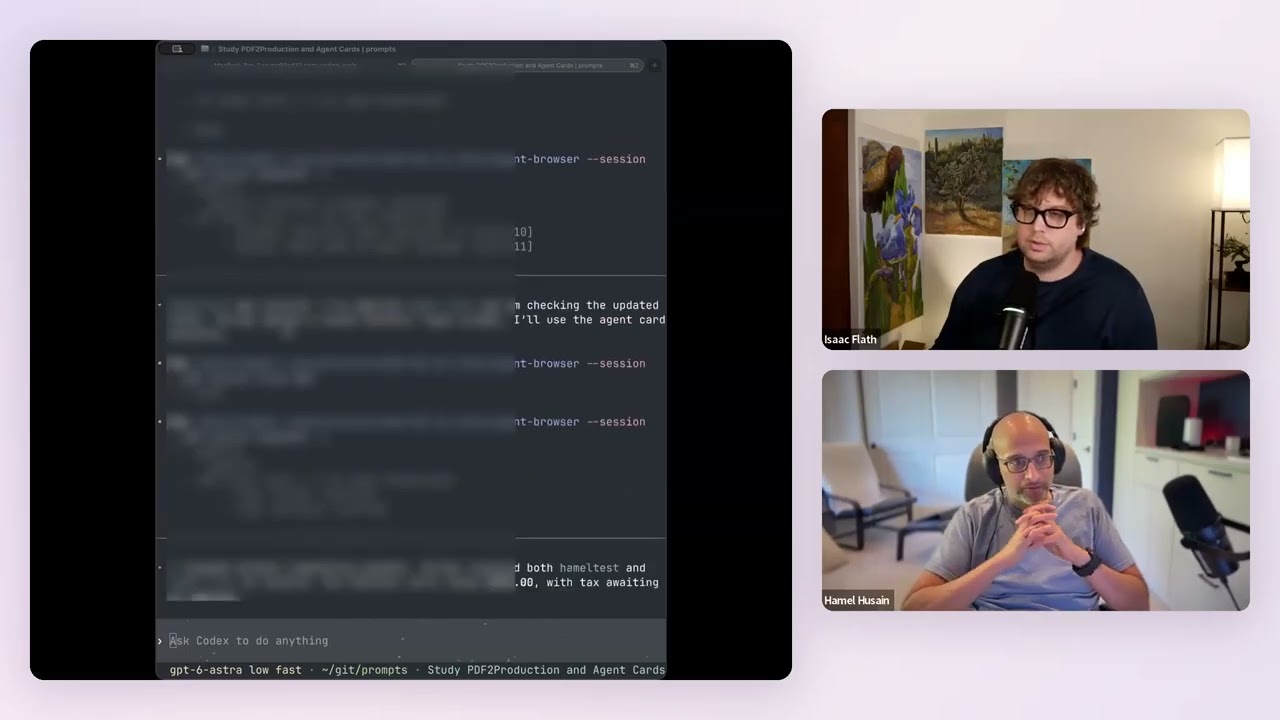
Watch how an AI agent attempts to purchase a course using a Mercury agent card. The demo highlights the security benefits of scoped permissions but reveals significant friction points in the payment process.
Read article
OpenAI unveiled major advancements in AI agents, focusing on 'Computer Use' to achieve superhuman software operation. Key announcements include Dots, GPT-6.1, and the Decisions API.
Read article
AI agents can simulate human behavior by combining LLMs with RAG, reflection, and planning. This allows organizations to run 'what-if' scenarios to predict customer and policy reactions before launch.
Read article
OpenAI unveils Dots, always-on AI agents, and ChatGPT Space for team collaboration. Key launches include UltraFast, GPT-6.1, and Codex in the Cloud, revolutionizing development workflows and AI capabilities.
Read article
CoreWeave Arena enables end-to-end validation of AI agents using Serverless Inference and Serverless RL. Learn how to improve LLM reliability and performance before production deployment.
Read article
Scaling development with AI requires more than just generating code. Learn how automated code review, Jev classifiers, and robust CI/CD guardrails are essential to manage the flood of AI-generated PRs and maintain system reliability.
Read article
Learn how to run powerful coding agents like Claude Code and Codex in a persistent cloud environment using a VPS and Herdr. This guide covers everything from secure SSH setup to advanced workflow integration.
Read article
NVIDIA OpenShell 0.1 provides a secure runtime boundary for AI agents, preventing compromised agents from executing unauthorized actions. It allows developers to deploy agents in a sandboxed environment where all components inherit consistent policy, credential, and audit controls.
Read article
Learn how to build and improve AI agents using Coreweave Arena. The workflow covers Serverless Inference for agent functionality and Serverless RL for boosting reliability.
Read article
AI News & Strategy Daily | Nate B Jones
Scaling AI productivity requires fixing the system, not the engineer. Learn six principles—from making agents 'multiplayer' to removing obsolete processes—to build a 'faster factory' for AI-assisted development.
Read article
AgentCraft is a game-inspired orchestrator that solves the human bottleneck of managing AI agents. It provides visibility, autonomy, and collaboration tools to scale agent use.
Read article
ARIA, a self-improving AI agent, uses a closed-loop framework to take production traces, convert them into offline eval tasks, find bugs, write fixes, and benchmark the new version.
Read article