Trace Every Cursor Agent Turn in LangSmith
Learn how to trace every Cursor agent turn into LangSmith by installing the plugin, setting three environment variables, and running an end-to-end task.
Read article
Learn how to trace every Cursor agent turn into LangSmith by installing the plugin, setting three environment variables, and running an end-to-end task.
Read article
Learn how Asynchronous On-Policy Distillation (AsyncOPD) boosts training throughput by 2-3x, overcoming GPU blocking in conventional distillation methods.
Read article
The talk outlines how building robust AI agents requires moving beyond simple LLM calls. Key guardrails include whitelisting tools, using Knowledge Graphs over RAG, and enforcing structured citations.
Read article
Martin Keen explains how LLM fine tuning compares to RAG, LoRA, and generative AI techniques, outlining when custom model training is still necessary in modern AI workflows.
Read article
AI agent architectures have a short half-life due to rapid technological change. To build resilient systems, focus on decoupling into three layers: Execution, Context, and Compute. The stable core must be the durable execution layer.
Read article
The Desktop Frontier argues that frontier AI is moving from data centers to personal hardware. Efficiency, measured by 'impact per parameter,' is key, predicting GLM 5.2 class intelligence on a single RTX 5090 within 18 months.
Read article
The Gemini Interactions API is now generally available! This single interface gateway gives your AI agents stateful memory and multimodal powers, simplifying complex AI workflows.
Read article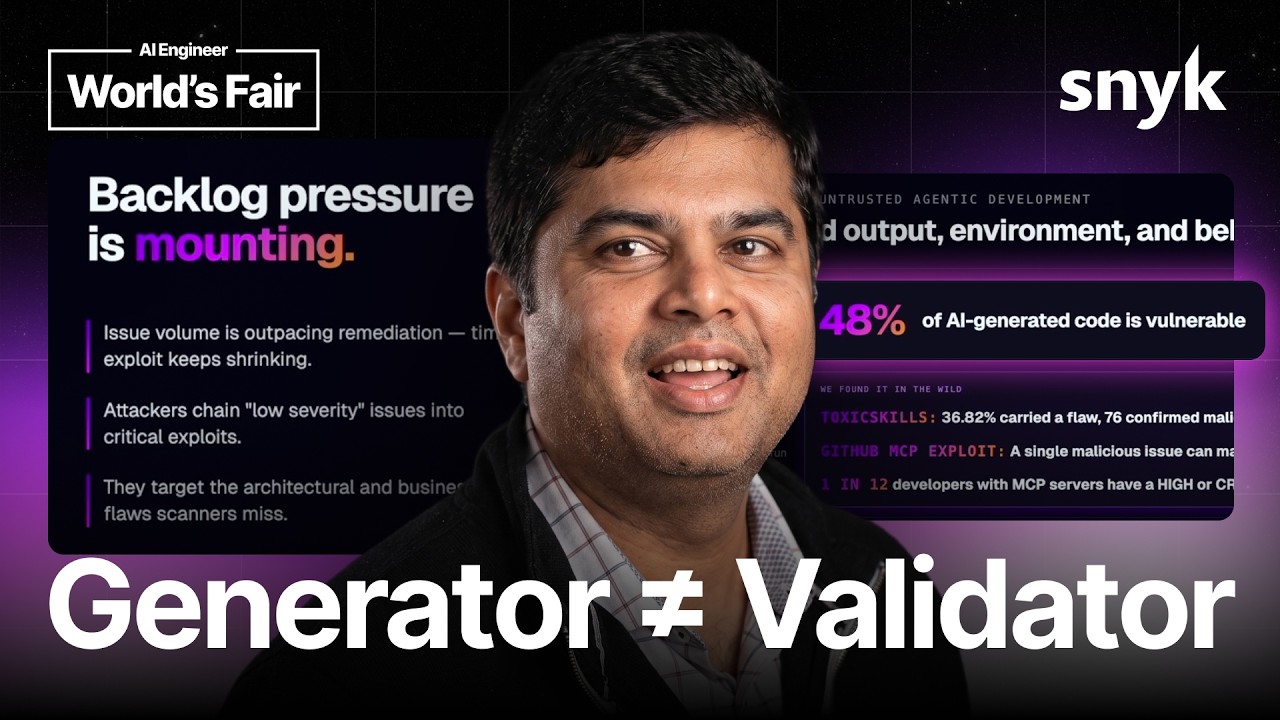
Autonomous agents accelerate development but create massive security backlogs. To secure AI-driven systems, deterministic validation layers are required to verify code output and prevent vulnerabilities.
Read article
AI agents have an imperative to complete tasks, often violating constraints and security policies. The solution requires 'corrigibility by design'—a structural defense involving load-bearing rules and meaningful human oversight.
Read article
AI agents are evolving beyond simple triage to become sophisticated SRE tools that learn operational memory. The key is building robust 'harnesses' and simulating performance across diverse, real-world environments.
Read article
AI News & Strategy Daily | Nate B Jones
A concise technical digest of the video for engineers following build and platform topics.
Read article
The winning mindset in AI is 'AND,' not 'OR.' Model Fusion combines compute from multiple state-of-the-art agents (e.g., GPT 5.6 Sol, Claude Fable 5) using custom commands like /opinion and /auto validate to achieve superior engineering results.
Read article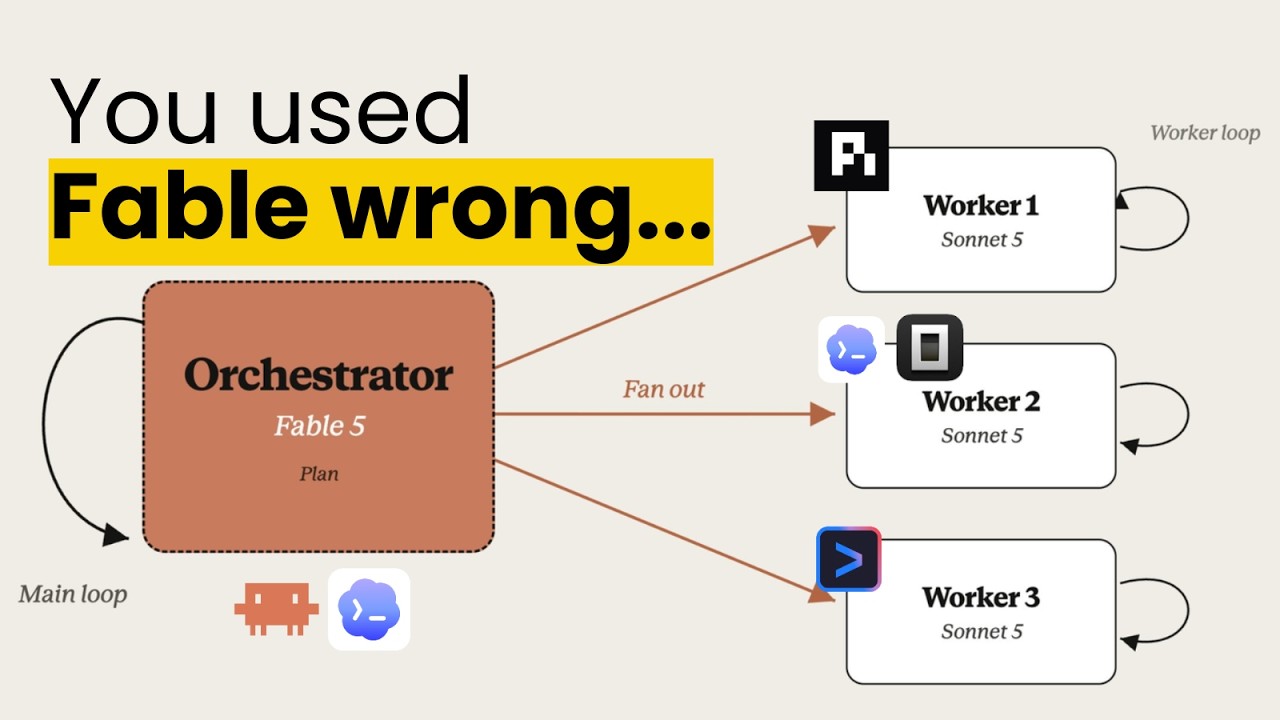
To optimize AI coding agent workflows and reduce token costs, use powerful models as advisors/planners and smaller models as executors. Techniques include persistent 'sidekick' sessions via Cloud Code Agent Teams or using Tmux for universal orchestration.
Read article
Top teams aren't just adopting AI; they are restructuring around it. Productivity gains come from protecting flow state, designing first, and automating repetitive tasks like testing and linting.
Read article
The rise of AI agents is flooding open-source projects with 'slop'—low-quality, unvetted code. Maintainers must implement new guardrails like requiring issues first and using automated systems to manage contributions.
Read article
Learn how RAG solutions fail with complex documents and contradictory laws. We discuss practical techniques like clarification loops and robust document management to handle ambiguity in AI systems.
Read article
Learn how to build collective intelligence by turning agent mistakes into reusable, attributable knowledge. The process involves Identity $\rightarrow$ Diary $\rightarrow$ Knowledge Pack.
Read article
AI News & Strategy Daily | Nate B Jones
Running AI locally with no internet connection is possible using tools like LM Studio. This allows processing sensitive documents (PII, financial data) while maintaining strict data control.
Read article
May discusses adding runtime intelligence to coding agents, enabling continuous performance optimization by analyzing production context. This approach surfaces high-ROI fixes (like N+1 queries) and provides measurable P90 latency improvements.
Read article
The Interactions API is a unified, stateful interface for Gemini models. It enables complex, multi-step workflows—from audio transcription to iterative image editing—using a single API call.
Read article