How Harmonic 4x'd User Retention by Building on Deep Agents
Harmonic quadrupled user retention by shifting from brittle query graphs to Deep Agents. Learn how a model-plus-tools loop and file system abstractions solve context overload.
Read articleTopic
All digests tagged Build Engineering
Harmonic quadrupled user retention by shifting from brittle query graphs to Deep Agents. Learn how a model-plus-tools loop and file system abstractions solve context overload.
Read article
A massive community effort tested ML reproducibility at ICML 2026 using AI agents. The challenge used 'tracko' to create fully auditable log books, finding significant flaws in published research.
Read article
A live demonstration shows how running `tessl review run` on a Snyk skill improved its score from 87% to 90%. The session highlights progressive disclosure and using Agent Scan to catch security vulnerabilities.
Read article
Learn how to achieve deep observability for voice agents using Gemini Live and LangSmith. See how tracing captures audio, tool calls, interruptions, and cost breakdowns.
Read article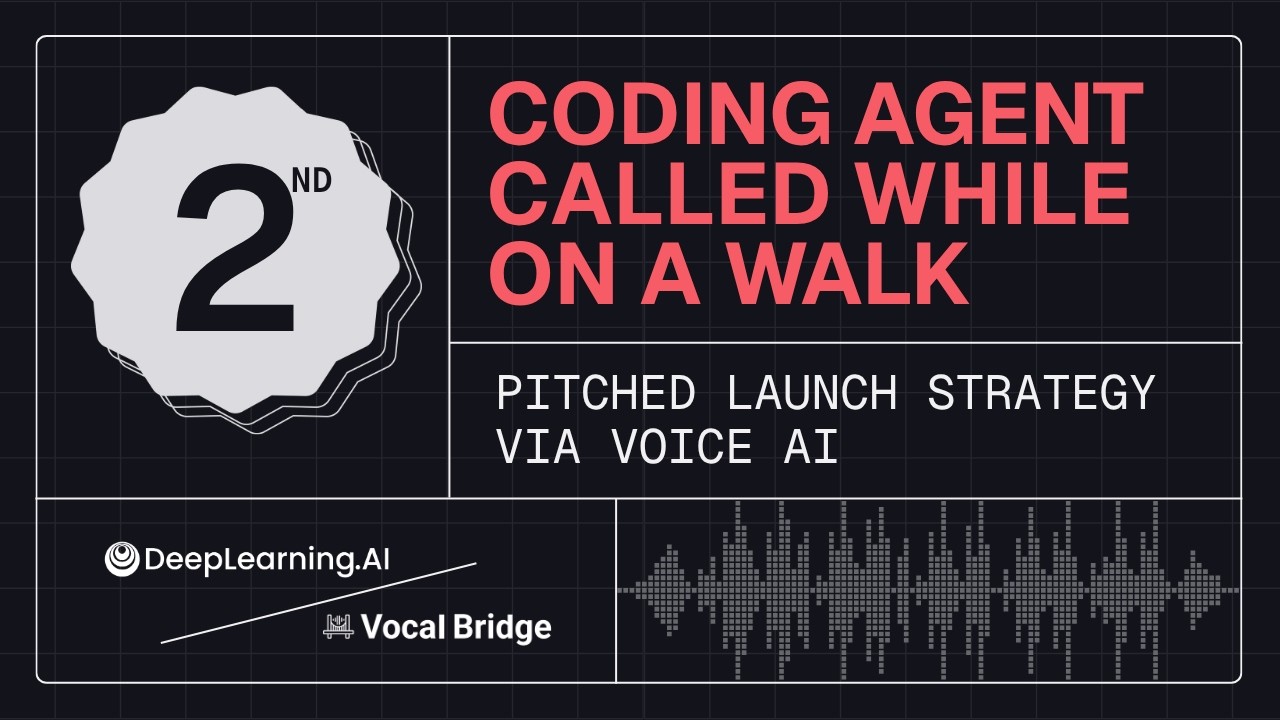
An autonomous AI agent handles product launch positioning (Tempo) while AFK, escalating only critical decisions via a voice call and logging all outcomes directly into project files.
Read article
As agents write 95% of our code, traditional review fails. Learn about 'harness engineering': defining invariants, using analytics on agent logs, and implementing risk policies to keep quality high.
Read article
Will Brown discusses extending Reinforcement Learning (RL) into complex, real-world tasks that lack clean, verifiable rewards. The core thesis is that 'environments' must serve as the anchor for learning.
Read article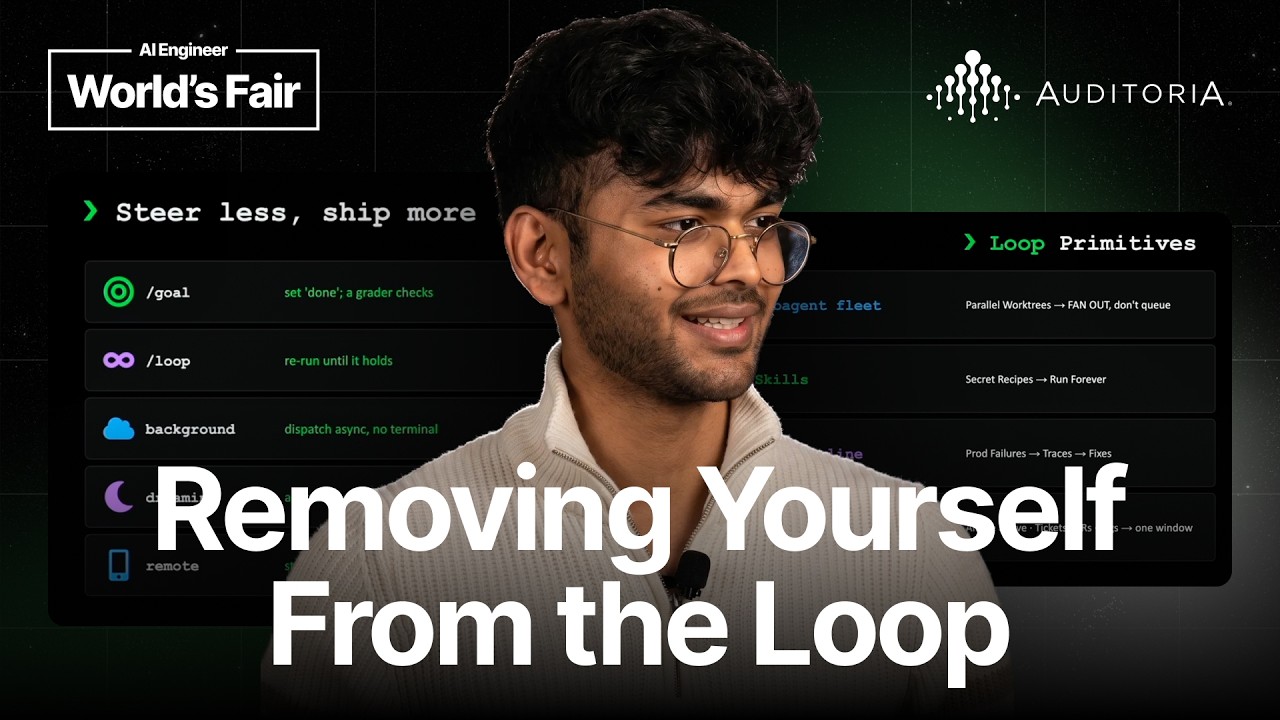
The bottleneck in shipping production AI agents isn't the model; it's the developer loop. Learn how to use sub-agents, skills, and goals to automate your entire development workflow.
Read article
Off-the-shelf LLMs provide fluent but inaccurate advice—the 'fluent bluff.' The solution requires grounding models in verifiable State-Action-Outcome records, moving finance toward outcome-driven AI.
Read article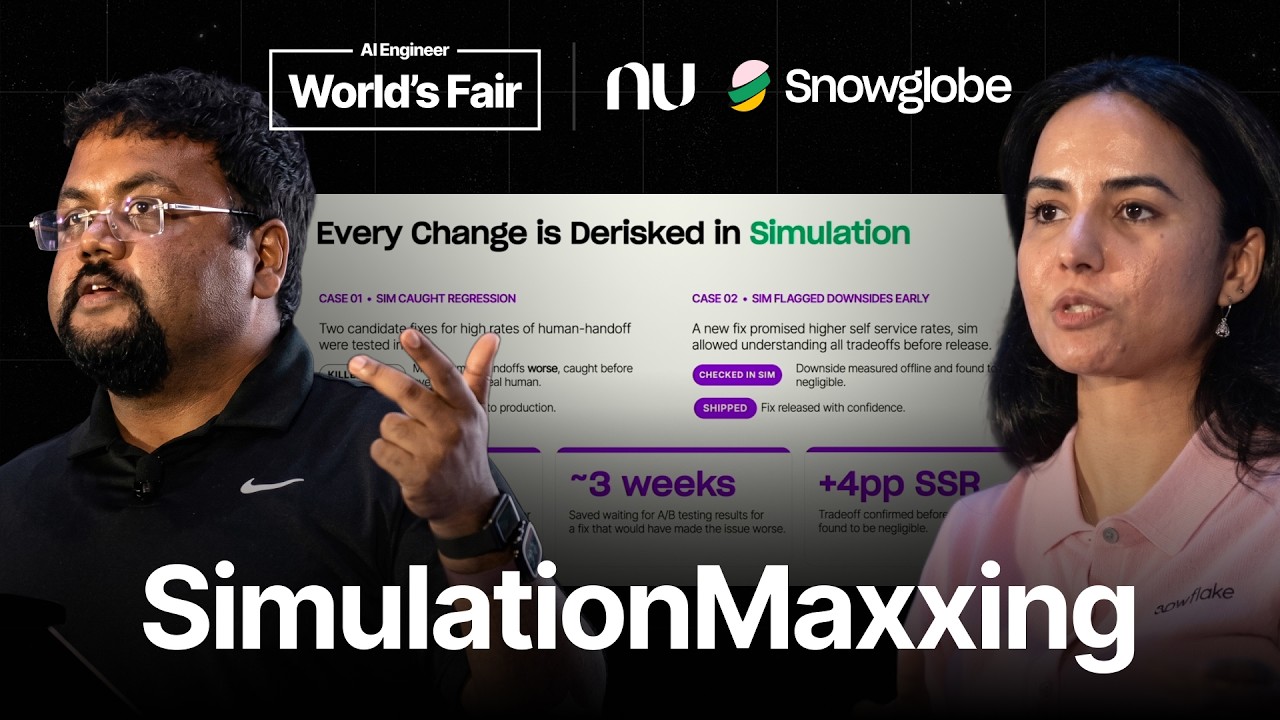
Nubank accelerated agent deployment by 20x using simulations. By generating grounded, multi-turn synthetic data instead of relying on slow production traces, teams can rapidly test and derisk AI agents.
Read article
Building production voice agents requires a modular, cascading architecture (ASR $\rightarrow$ LLM $\rightarrow$ TTS). Key focus areas include managing latency within a 1-1.5 second budget and implementing robust fallback systems across all components.
Read article
AI News & Strategy Daily | Nate B Jones
DeepSeek V4 Pro charges just 87 cents for a million tokens, compared to Kimi K3 at $15. Evaluating Chinese models requires focusing on 'cost per accepted result,' not just token price.
Read article
Data's value lies in the trajectory and reasoning trace, not just the final output. The speaker argues that successful companies must pivot from being mere 'data businesses' to becoming infrastructure providers (neo-labs).
Read article
Instead of massive 40,000 line PRs, adopting control theory loops (Sensor $\rightarrow$ Controller $\rightarrow$ Actuator) is key for building robust, verifiable code in complex systems.
Read article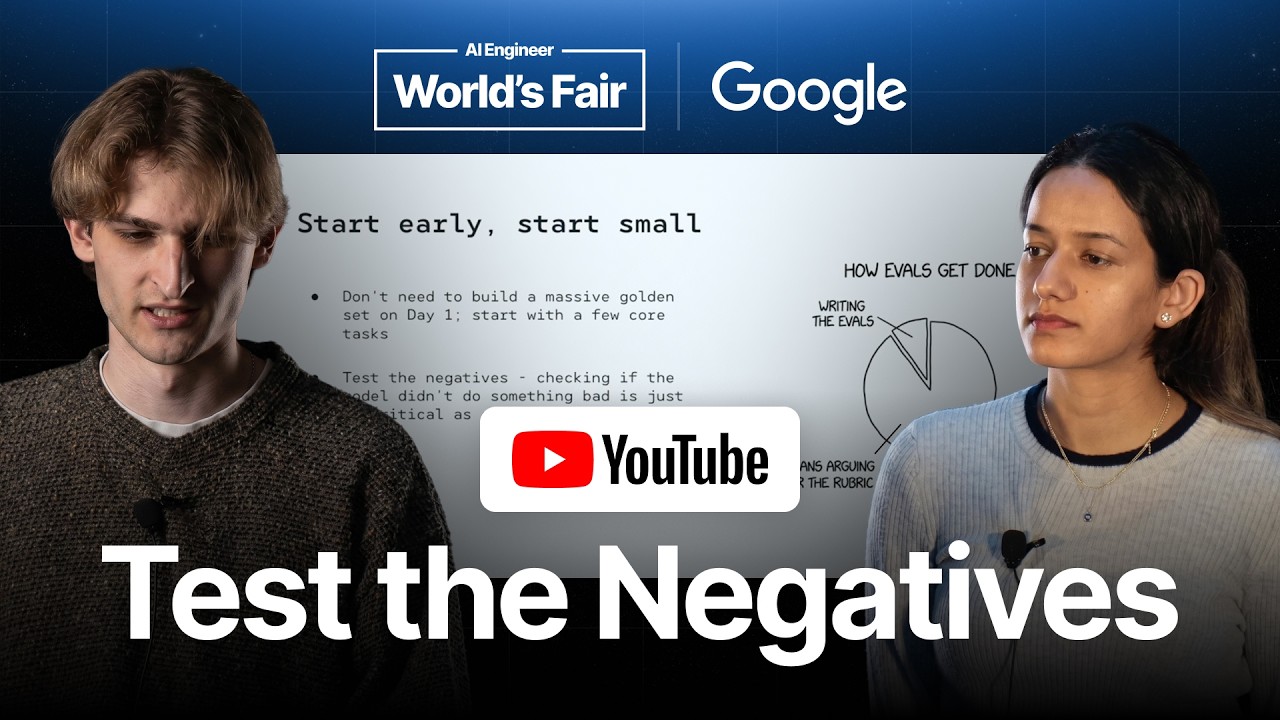
Building reliable AI agents requires a comprehensive evaluation loop that extends far beyond prompt engineering. The process involves optimizing foundational tools, establishing rigorous evaluation workflows (Evals), and iteratively refining behavior using feedback signals.
Read article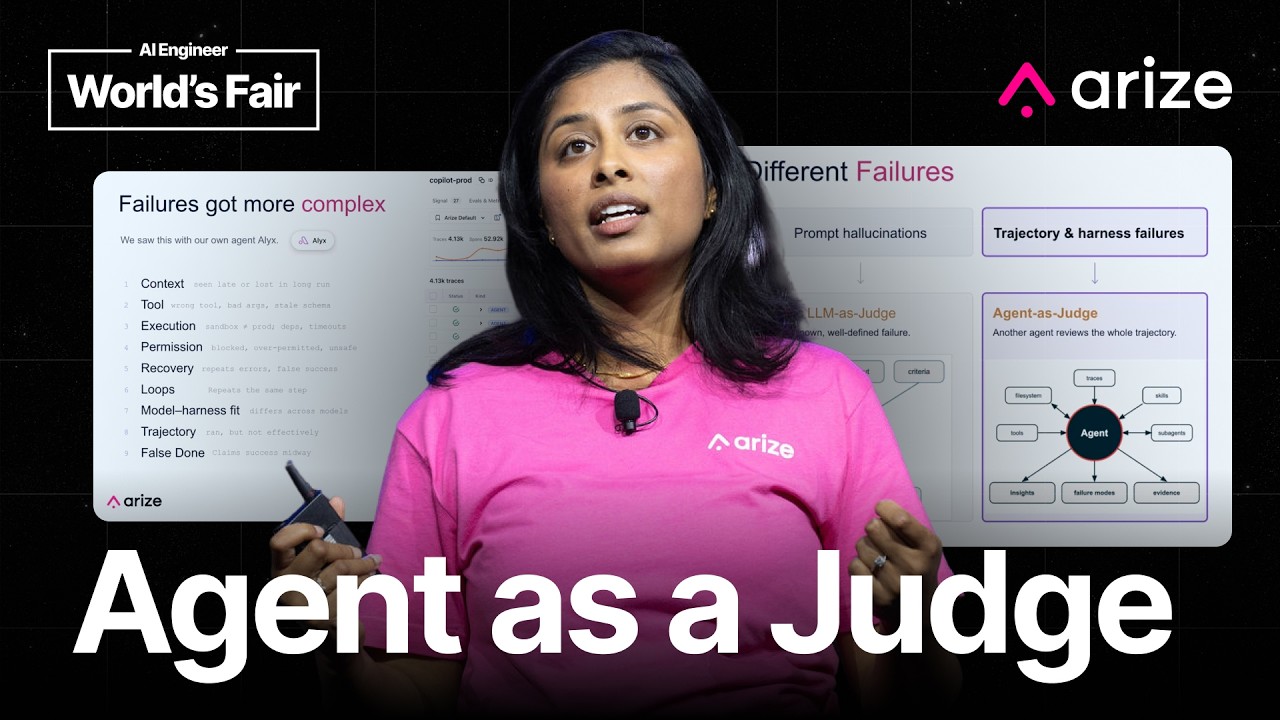
Evals must evolve with agents: from static checks to LLM judges, the future requires Agent as a Judge for adaptive dynamic analysis.
Read article
Coding agents are generalist agents because of positive transfer: better at code means better at everything. The future requires single Systems of Record to manage context and surfaces.
Read article
Learn how to optimize AI agent skills using automated reviews. We analyze Qodo's PR Resolver skill, boosting its score from 78% to 89% by refining metadata and structure.
Read article
The Agent Auth protocol proposes securing autonomous AI agents by shifting from granting full user credentials to assigning unique agent identities and fine-grained capabilities. This ensures traceability, granular control, and robust authorization flows.
Read article
We argue that HTML, CSS, and JavaScript are the native languages of LLMs, making them ideal for agent-generated video content. Our framework, Hyperframes, solves deterministic MP4 rendering by freezing time and seeking frame-by-frame.
Read article