
How to Measure OCR Quality
Evaluating OCR quality is challenging because benchmarks are often biased or measure formatting, not true quality. The solution is to build custom, unit-test style evals tailored to your specific use case.
Read articleTopic
All digests tagged Benchmarking
Suggested route
Move from earlier context through the available material to the newest signals. This route is a reading aid, not a difficulty ranking.
Evaluating OCR quality is challenging because benchmarks are often biased or measure formatting, not true quality. The solution is to build custom, unit-test style evals tailored to your specific use case.
Read article
The Universal Verifier addresses the unreliability of LLM judges for agent testing. By using structured rubrics and ranking evidence, it significantly closes the gap between perceived and actual agent success rates.
Read article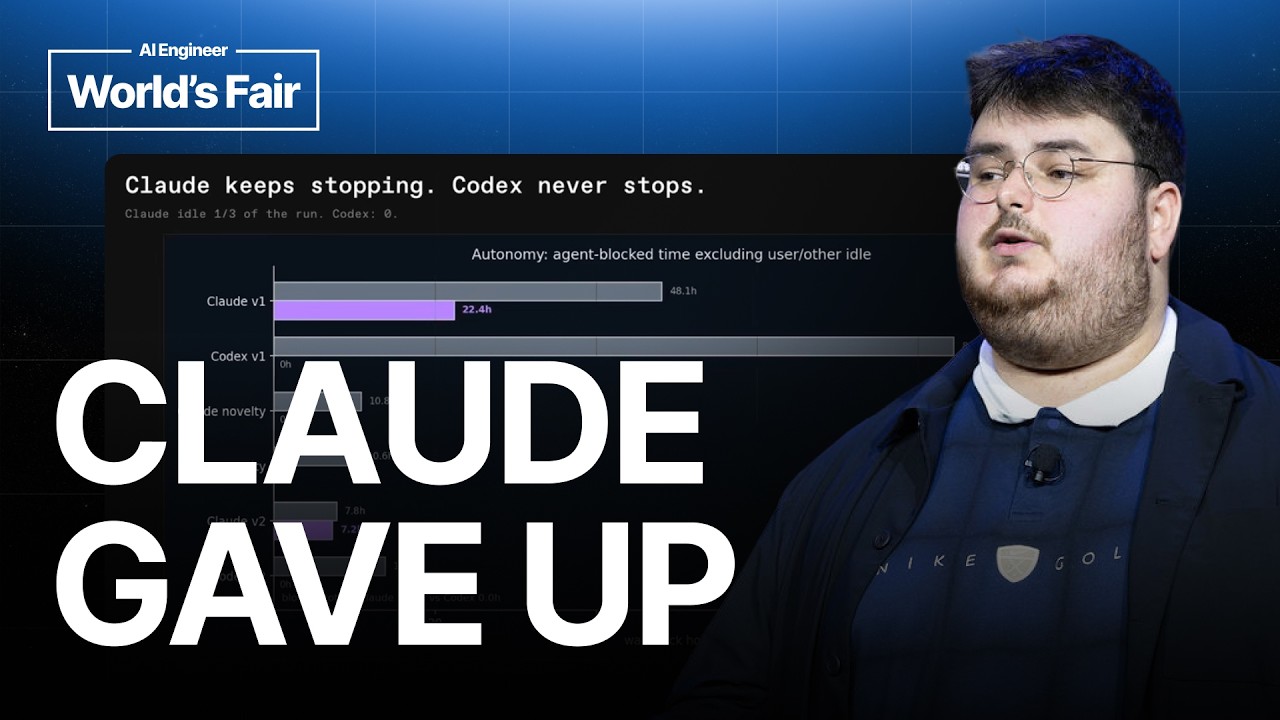
AI agents Codex and Claude Code raced in an Optimizer Speedrun, beating human records for training GPT-2. However, the key finding is that they combined existing ideas, not novel optimizers, highlighting the need for structured discovery loops.
Read article
Learn about the next generation of voice AI, covering native audio models, conversational latency, and agentic tasks. We discuss moving beyond WER to measure real-world dialogue quality.
Read article
Dive into serving World Models with NVIDIA Cosmos 3 Super. Learn the critical trade-offs between latency and throughput when benchmarking video generation on HGX B200 and H200 systems.
Read article
Cedric Clyburn explains why LLM benchmarks don’t reflect real-world performance in AI applications and agents. Learn how to evaluate accuracy, latency, and cost to build reliable AI systems at scale.
Read article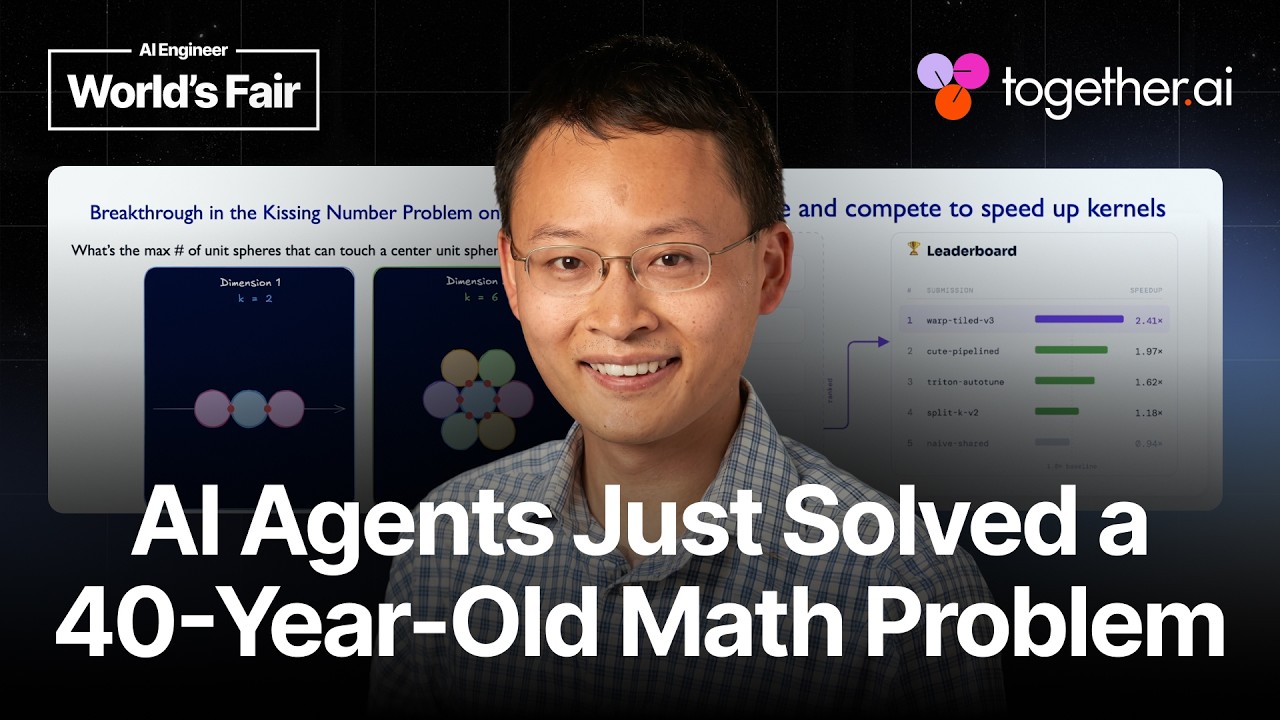
James Zou discusses designing environments, like the Einstein Arena and DSGym, for AI agents. These platforms enable open scientific collaboration and advanced benchmarking by moving beyond restrictive workflows.
Read article