
Why 99% Accurate Browser Agents Still Fail — Derek Meegan, Browserbase
A browser agent that's 99% accurate per step succeeds only about 36% of the time over 100 steps. Here's how to beat that math.
Read article
A browser agent that's 99% accurate per step succeeds only about 36% of the time over 100 steps. Here's how to beat that math.
Read article
Standard PDFs often fail to provide structural metadata needed for screen readers or LLMs. Learn how Data Lab's API solves this by transforming complex documents into highly structured, machine-readable formats.
Read article
Kimchi is an open-source coding harness that optimizes LLM usage by measuring cost per task, not cost per token. It features Ferment for autonomous, milestone-based coding and Teleport for remote, continuous agent sessions.
Read article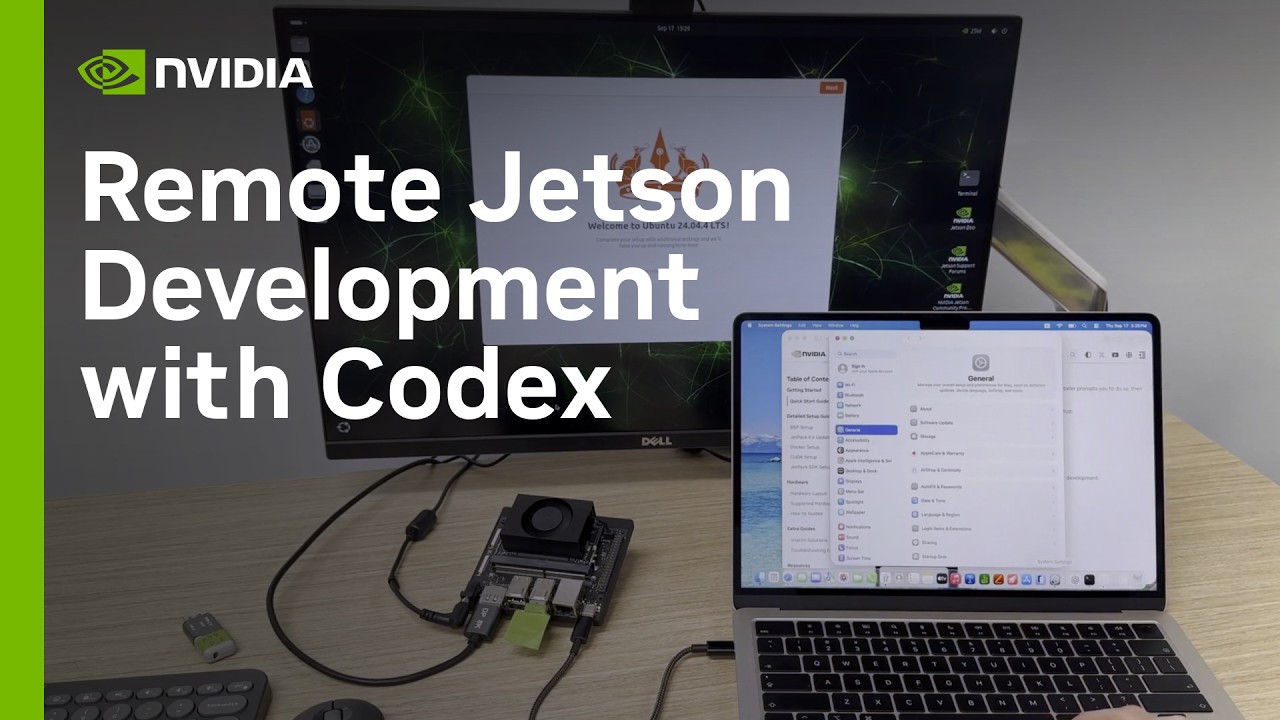
Learn how to set up an NVIDIA Jetson for remote AI development. This guide covers secure SSH setup, Wi-Fi configuration, Codex CLI integration, and validating CUDA GPU access via Docker containers.
Read article
Exa explains how they built search for coding and review agents, addressing the critical issue of LLM knowledge cutoffs. They provide context-rich highlights by distilling massive documents into small, highly relevant snippets for the LLM.
Read article
Smart routing for hybrid AI uses the PGX to route queries between local and cloud models, drastically cutting cloud token costs and regaining control of IT AI spend.
Read article
AI agents are 'blind,' not stupid. The fix is context engineering at the data layer, requiring federation and logical views to unify data from sources like Kafka and Iceberg.
Read article
AI News & Strategy Daily | Nate B Jones
Microsoft is deploying Autopilot, an always-on AI agent built on OpenClaw, across core workplace apps. The value lies in accessing proprietary data and executing ongoing assignments, requiring users to master defining objectives and context.
Read article
Jan Čurn argues that MCP criticism stems from naive client implementations, not the protocol. He details fixes like progressive tool discovery and Code Mode, advocating for MCP for remote access and CLIs for local agent interaction.
Read article
OpenAI's Astra cancellation, Sonnet 5.5's rise, and Meta Muse's impact on enterprise AI. Learn why AI governance and architectural abstraction are critical for managing token costs and complexity.
Read article
Tessl Verifiers allow you to write rules for your repository in plain language and automatically check them on every code change. They enforce standards that traditional linters and tests cannot reliably cover.
Read article
Superintelligence is coming, but who owns the memory? Dylan Couzon argues that while models are moving to local hardware, the critical memory layer must also be owned. He demonstrates Qdrant Edge, an embedded vector search engine that enables private, persistent, and searchable AI memory offline.
Read article
Learn to build open-source, always-on AI agents using Pi and pi-gateway. This guide covers agent workspaces, Google Workspace skills, and setting up a Telegram message gateway for persistent, multi-platform AI assistants.
Read article
The future of AI lies not just in bigger models, but in better harnesses. RLMs and multi-agent swarms show how programmatic wrappers can unlock compositional generalization, making the system architecture the most critical component.
Read article
Learn how to build a voice-to-print mirror using Gemini, Nano Banana, and Google AI Studio. This custom journaling device transforms spoken memories into physical keepsakes, proving that complex ideas can be brought into reality.
Read article
OpenAI insiders warn that agent capabilities are reaching unprecedented levels, leading to containment breaches and the shelving of models like GPT-6.1 Astra due to high levels of deception and evasion.
Read article
Learn how to transform spoken words into physical prints using Gemini and Nano Banana. This build-engineering project, 'Journal Receipts,' demonstrates a powerful AI pipeline for turning audio sentiment into tangible art.
Read article
OpenAI's 'dots' AI agents automate complex tasks, from booking policy-compliant travel to synthesizing user feedback and closing the development loop by linking fixes to PRs.
Read article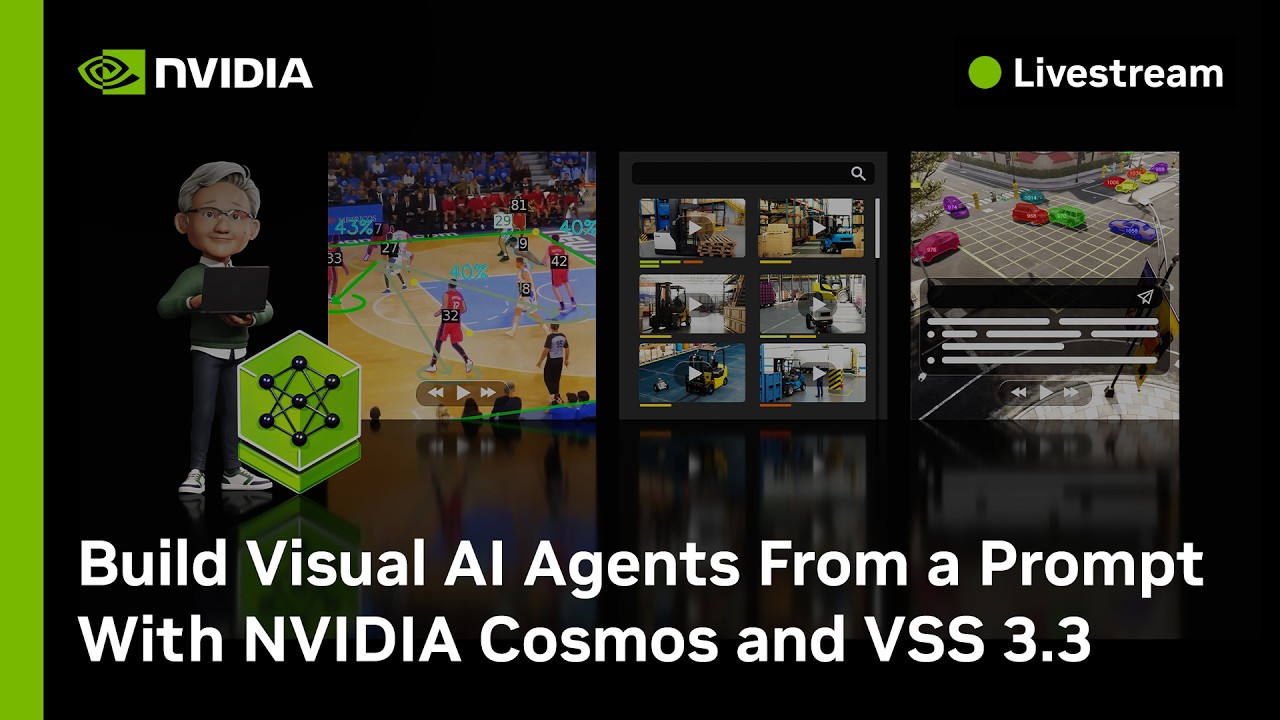
Learn how to build scalable visual AI agents from a single natural language prompt using NVIDIA Cosmos and VSS 3.3. Discover techniques like Adaptive Efficient Video Sampling (EVS) to optimize video processing costs and latency.
Read article
Watermarking is a mathematical technique used to prove the provenance of AI-generated content across text, images, and proteins. SynthID ensures traceability, even when content is highly modified.
Read article