AI News & Strategy Daily | Nate B Jones
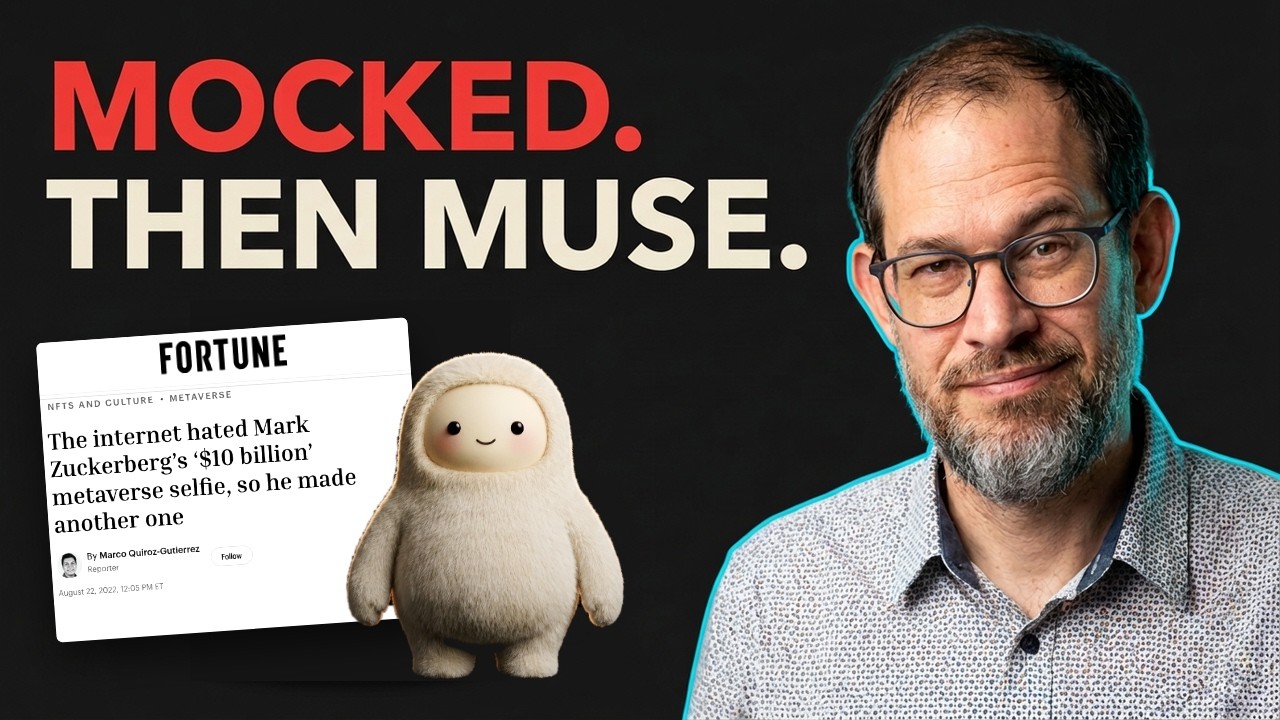
You've Never Lost $19 Billion. So Why Are You Playing It Safer Than Zuckerberg?
Summary
The video analyzes Meta's Muse AI agent launch, arguing that success in the AI era is less about massive corporate resources and more about strategic 'agency'—the willingness to take big swings. Key lessons for builders include maintaining extreme product polish (paying attention to details nobody asks for), keeping core development teams small and focused, and leveraging AI to drastically lower the cost of initial attempts, thereby shortening the distance between ambition and a testable product.
Key takeaways
-
Swing Again After Failure
The lesson from Meta is that instead of becoming cautious after massive losses (like Reality Labs' $19.2 billion loss in 2025), the successful strategy is to keep pursuing a platform vision (Muse) rather than retreating to core, safe cash flow.
-
The Power of Small, Focused Teams
14:17
The success of Muse was attributed to a small team (fewer than 200 people) that could make sharp, focused decisions, avoiding the 'awkward compromises' that often arise in large, consensus-driven organizations.
-
Polish is Found in the Details
17:10
True product polish is demonstrated not in the dramatic launch features, but in the consistency of the 'dull edges'—the parts of the experience (like the app's avatar behavior or secondary tabs) that require sustained attention to feel seamless and natural.
-
AI Lowers the Cost of Ambition
20:50
AI technology dramatically reduces the financial and technical barriers to entry, allowing individuals to test ambitious ideas (like complex quote comparison tools) without needing immediate funding or a large development team.
Technical details
-
AI Agent Functionality (Muse)
0s
Muse is designed to function as a personal AI agent that helps users with daily tasks (e.g., canceling subscriptions, sorting out accounts). Its value lies in its ability to draw users into deeper engagement by providing tangible, immediate utility.
-
User Experience (UX) Polish
1030s
The team focused on addressing the user's underlying anxiety when delegating tasks to AI: 'What's happening? Are you doing it?' This required detailed design work, such as visual indicators (e.g., Marvin getting a laptop) to show the agent's status and process.
-
Organizational Structure
857s
The success model emphasized keeping the core team small to ensure focused decision-making and prevent the dilution of product quality through bureaucratic compromise.
Mentioned resources
Channel & topics
Watch on YouTube · Back to latest
This independent, AI-assisted summary is provided for commentary and informational purposes. It may contain errors or omit important context. Please watch the original video for the creator's complete presentation. Video, thumbnail, and related copyrights belong to their respective owners.