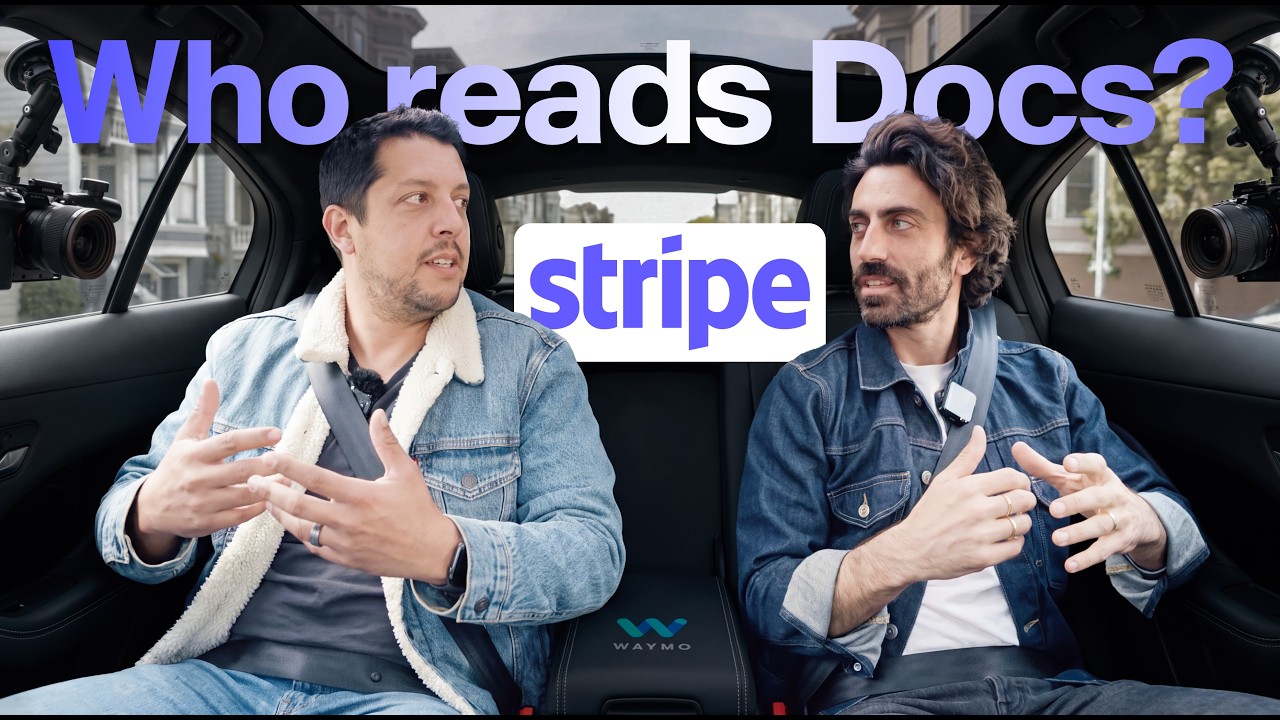
Why Stripe Cut 500,000 Internal Docs Down to 5,000?
Summary
The shift in documentation requirements due to AI agents necessitates a fundamental overhaul of technical writing practices. Speakers argue that documentation must be optimized for two distinct audiences: humans (who require visualization, high-level context, and an empathetic user experience) and AI agents (which require pure, machine-readable formats like Markdown). Key strategies include implementing rigorous decision records, drastically reducing documentation bloat (e.g., Stripe's reduction from 500,000 to 5,000 docs), and establishing clear ownership and accountability for documentation quality to prevent production incidents.
Key takeaways
-
Agent vs. Human Documentation Needs
Humans require visual aids and high-level context (the 'big picture'), while AI agents are best served by pure, endless amounts of Markdown, as they process text efficiently and lack the human need for visual cues.
-
The Value of Decision Records
15:42
Implementing decision records (ADRs) that capture the rationale, decision-makers, and pros/cons of engineering choices provides a critical audit trail. This prevents agents from making assumptions or reverting to outdated practices.
-
Documentation Bloat and Cleanup
24:22
Organizations often suffer from massive amounts of stale, outdated, or redundant documentation (estimated at 95% of content). Cleaning up this bloat is critical for improving search relevance and agent performance.
-
Accountability and Ownership
The industry trend is moving toward assigning explicit ownership of documentation sets (e.g., 'I own reliability'). This shifts responsibility from the AI model to the human team, forcing greater rigor in documentation maintenance.
More digests on Technical Documentation
Technical details
-
Stripe Documentation Reduction
1529s
Stripe successfully reduced its internal documentation from approximately 500,000 documents down to 5,000 worth maintaining, demonstrating a scalable approach to documentation governance.
-
Agent Context Handling
1212s
AI agents can struggle with outdated information because they may 'lean on their biases' or pre-existing training data, ignoring the most current instructions on a page. This requires prompt injection techniques to enforce adherence to the latest source material.
-
Optimal Documentation Format
324s
For agents, the ideal format is pure Markdown, as it allows the agent to read every character and context point. For humans, the format should prioritize visuals and high-level summaries.
-
Process Documentation
1702s
The use of flowcharts and diagrams is highly effective for conveying complex processes (like a software development lifecycle) compared to lengthy, text-heavy documents.
Mentioned resources
- Stripe
- Falconer
- Documentation for Developers
- Vercel
Channel & topics
Watch on YouTube · Back to latest
This independent, AI-assisted summary is provided for commentary and informational purposes. It may contain errors or omit important context. Please watch the original video for the creator's complete presentation. Video, thumbnail, and related copyrights belong to their respective owners.