The Future of Agents with Harrison Chase
Summary
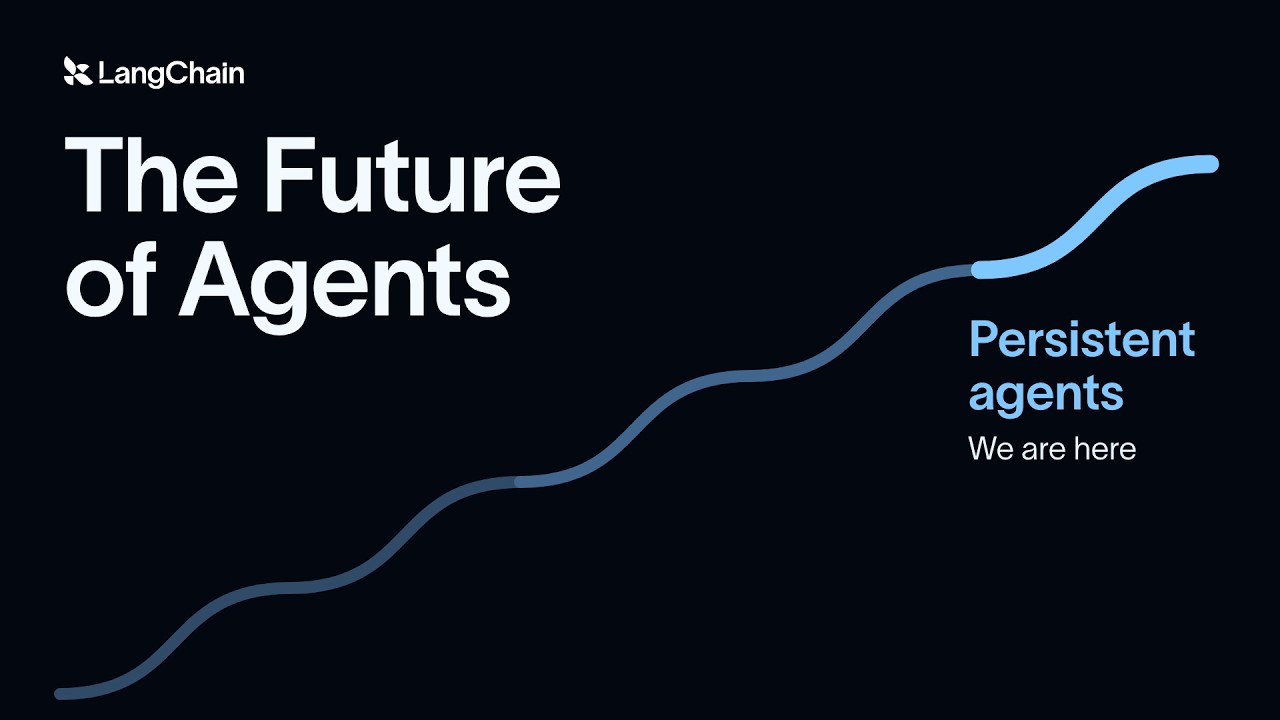
The industry is shifting from simple task-based LLM interactions to complex, persistent, and always-on AI agents. To manage the growing complexity, reliability, and cost of these agents, the focus must move beyond the model itself and encompass three critical dimensions: the intended behavior (runtime), the observed behavior (improvement loop), and the governed behavior (policy). Langsmith introduces a comprehensive platform to manage this entire lifecycle.
Key takeaways
-
The Rise of Persistent Agents
3:30
Persistent agents are defined by four characteristics: they are goal-oriented (optimizing for an outcome, not just a task), always-on (reacting to real-world events/schedules), accumulate context over time, and are multiplayer/multi-surface (operating across different interfaces like Slack and web apps).
-
Agent Behavior is Multi-Dimensional
12:20
Agent behavior must be managed across three layers: the intended behavior (defined in the runtime), the observed behavior (the improvement loop using traces), and the governed behavior (enforced via policy at choke points).
-
The Importance of the Improvement Loop
11:20
Reliable agents require a continuous feedback loop. This involves observing agent traces, spotting error patterns, and using those failures to generate test cases and code fixes (Langsmith Engine).
-
Tool Use Requires Governance
17:30
Tool use must be secured and governed using a Tool Gateway, which tracks the identity of the caller, enforces policies, and maintains a comprehensive audit log, ensuring compliance and control.
Technical details
-
Agent Architecture Layers
370s
An agent is composed of three layers: the Model (LLMs, reasoning, tool calling), the Harness (how the model interacts with the environment, e.g., file system, sandbox), and the Context (application-specific instructions, facts, memory).
-
Agent Runtime Components
490s
The Agent Runtime (e.g., Langsmith Deployments) is the infrastructure that runs the agent. It includes features like durable execution (recovering from failure), context hubs, cron jobs, and task queuing/steering for incoming messages.
-
Langchain Deep Agents
560s
Langchain Deep Agents is an open-source, model-agnostic base harness designed to be modified via middleware, supporting skills, summarization, context offloading, and sub-planning.
-
Memory Management
870s
Memory is complex and involves more than just storage format. It requires the agent to 'take notes' while running, and a separate 'curator agent' (the dreaming agent) to process these notes and update the knowledge base.
Mentioned resources
- Langsmith
- Langchain Deep Agents
- Langmith Engine
Channel & topics
Watch on YouTube · Back to latest
This independent, AI-assisted summary is provided for commentary and informational purposes. It may contain errors or omit important context. Please watch the original video for the creator's complete presentation. Video, thumbnail, and related copyrights belong to their respective owners.