
How AI Agents Work: Inside Agentic Inference
Agentic workflows fundamentally change AI compute workloads, requiring new benchmarking methods that measure throughput per megawatt, interactivity, and end-to-end latency.
Read articleTopic
All digests tagged AI Agents
Agentic workflows fundamentally change AI compute workloads, requiring new benchmarking methods that measure throughput per megawatt, interactivity, and end-to-end latency.
Read article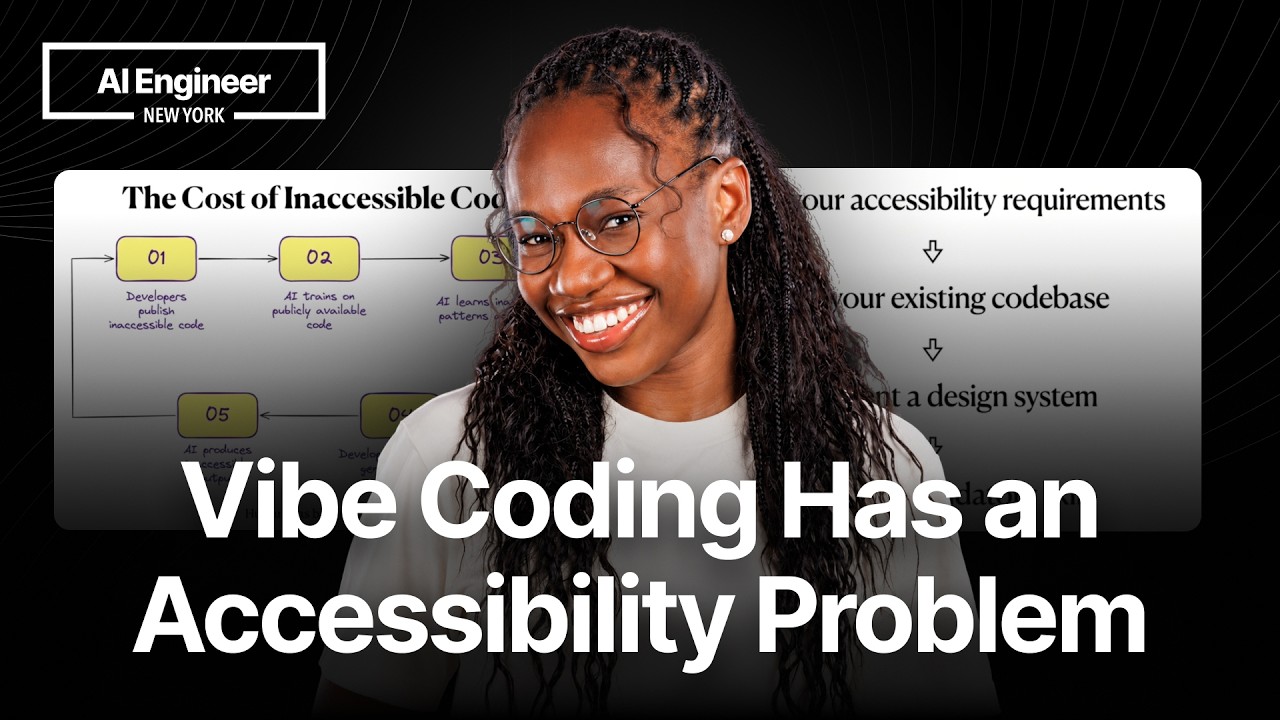
Accessibility must be a core requirement from the start. AI agents are powerful, but they require mandatory skills and guidance to prevent inheriting biases and generating verbose, non-semantic code.
Read article
The future of AI engineering involves building robust, governed agent frameworks. Key architectural components include a centralized data vault, a five-layer agent lifecycle, and continuous evaluation loops to manage non-deterministic behavior.
Read article
The future of enterprise AI lies in long-running agents that automate document workflows. We explore the advanced document context layer, covering specialized OCR, agent harnesses, and optimizing models for cost and accuracy.
Read article
Can AI agents kill expensive SaaS? We tested it by cloning a $43K/yr event management tool. Discover what mixed models, guardrails, and human domain expertise are required to build (and own) the next generation of business software.
Read article
DDC is a methodology that uses AI agents to fail on real production incidents, systematically identifying and curating the minimum necessary knowledge context. This approach treats incident data as knowledge tests, moving beyond static runbooks to a 'living context.'
Read article
Corey Gallon details a three-level agent review method to combat AI failures. Learn how to implement artifact fingerprinting, independent source checks, and adversarial review for reliable agent outputs.
Read article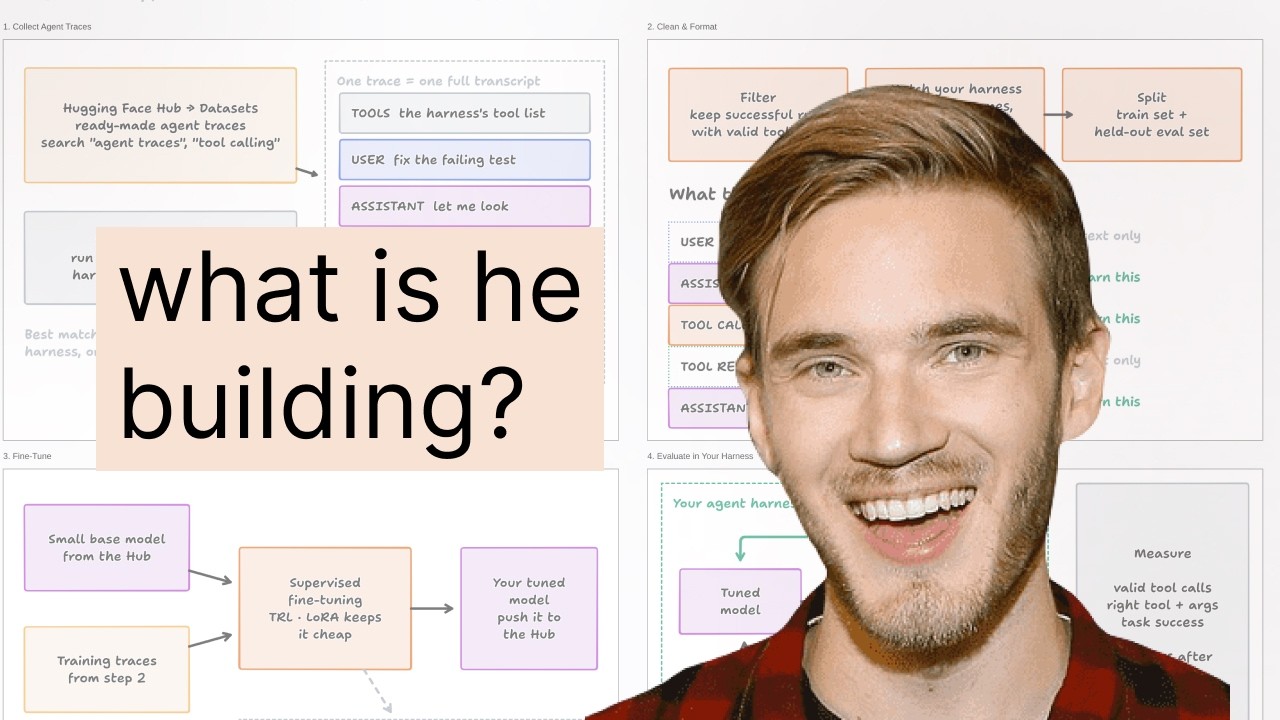
Learn how to build local AI agents using Odysseus and llama.cpp. We break down agent harnesses, tool calling, and fine-tuning Qwen 3.5 9B on agent traces for maximum privacy and control.
Read article
The reading group explores agent policy compliance, noting that LLMs struggle to follow complex SOPs. Solutions involve implementing deterministic and model-based guards outside the LLM to ensure reliable policy adherence.
Read article
The future of AI agents lies in specialization. We must move from 'god models' to thousands of hyper-scoped, domain-specific agents, requiring standardized runtimes and a microservices mindset.
Read article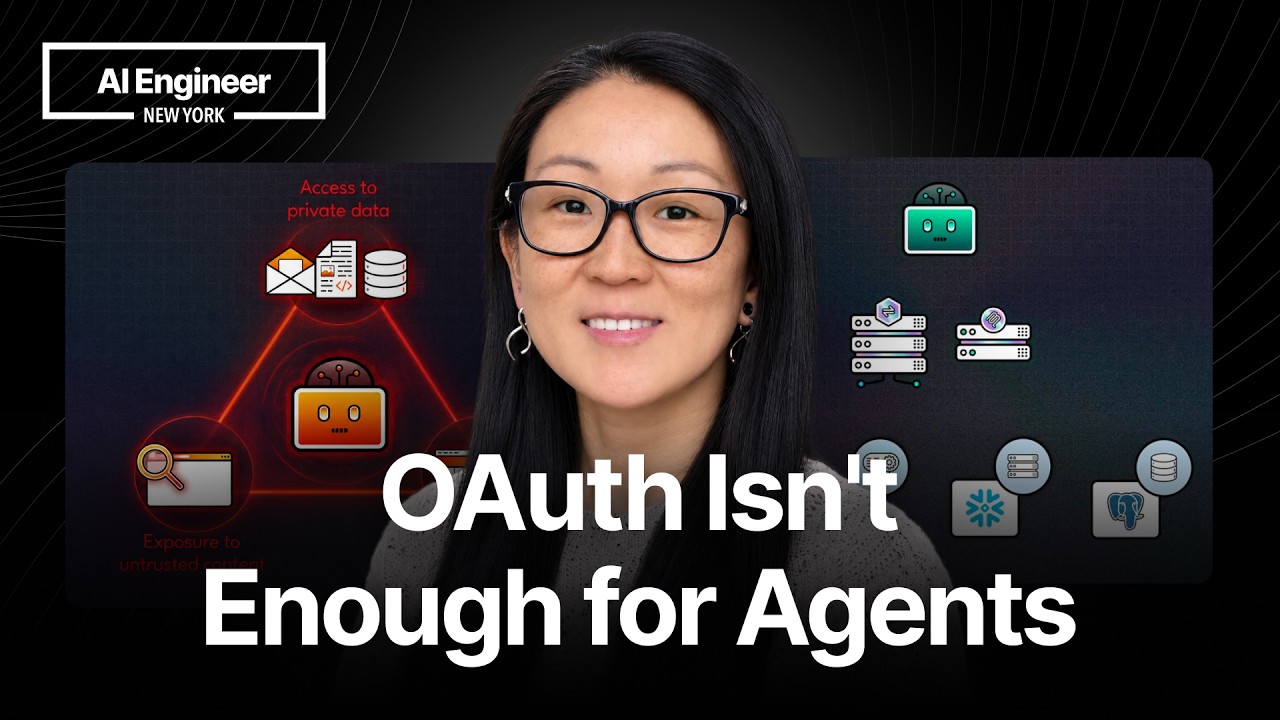
Securing AI agents requires moving beyond standing credentials. By implementing OAuth token exchange and using a Security Token Service (STS), organizations can enforce task-scoped, ephemeral access, mitigating the risk of the 'lethal trifecta.'
Read article
Financial planners can build AI agents without writing code by capturing institutional judgment. The process involves five steps: Pick, Teach, Pack, Test, and Ship.
Read article
AI is changing software development from manual coding to architectural orchestration. Learn the five concepts—Spec-Driven Development, Context Engineering, and Loop Engineering—needed to master AI agents and build robust systems.
Read article
Learn to build a 'research desk' app using Claude Managed Agents. We cover multi-agent coordination, Outcomes for self-supervision, and secure credential injection via Vaults.
Read article
Adi Singh argues that agent identity will be accumulated on existing human surfaces like email, not issued by a new spec. He details how existing protocols and surfaces are critical for agent adoption, using the Telnyx case study to illustrate the power of API-driven integration.
Read article
Robert Brennan details four strategies for sandboxing AI coding agents: Docker, GitHub Actions, VMs, and Kubernetes. He argues that Kubernetes offers the best isolation and scale for autonomous agents.
Read article
The future of AI products lies in 'always-on' agents that orchestrate themselves. We explore the shift from completions to multi-agent systems, demonstrating how agents can run complex, end-to-end businesses.
Read article
Discover how to improve browser agents without changing model weights using the AutoBrowse loop. This system pairs a Doer agent with a Teacher agent to generate reusable 'skill' files, dramatically increasing reliability and reducing operational costs on complex websites.
Read article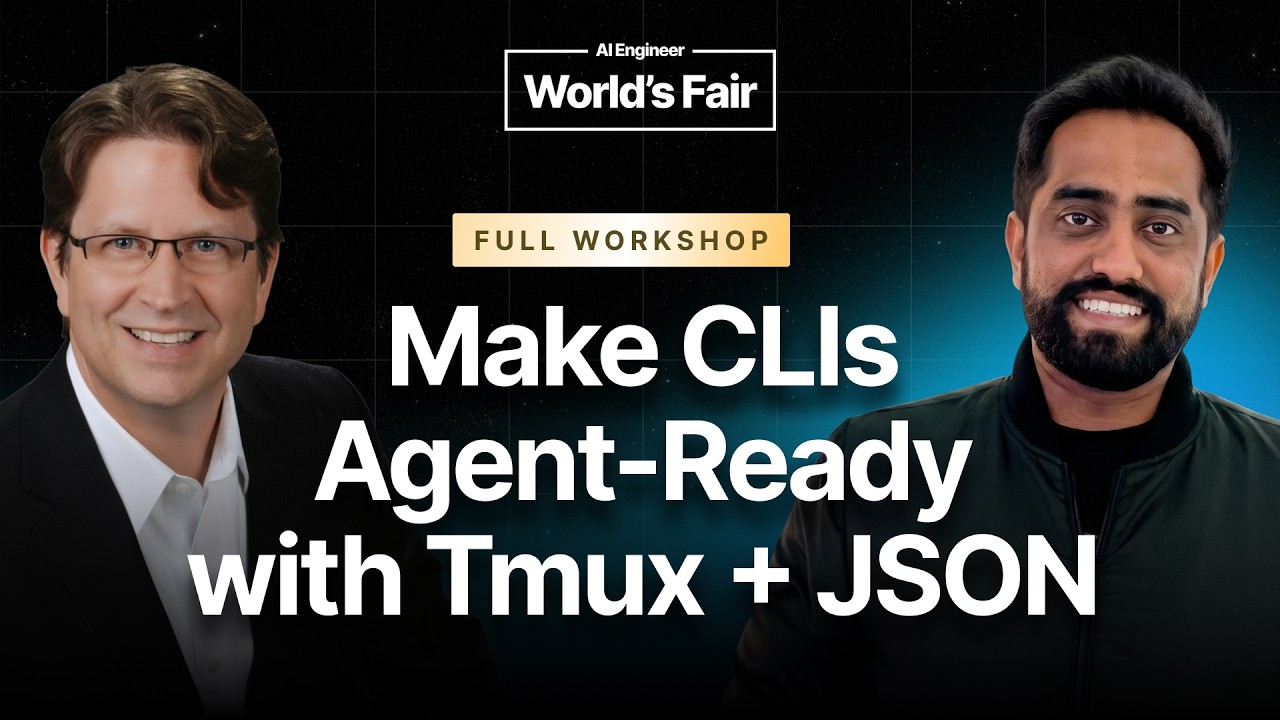
The presentation details how to adapt interactive CLIs for AI agents, moving beyond simple flags. Techniques include using tmux sessions, IPC side channels for structured JSON, and context injection to manage complex, contextual workflows.
Read article
Perception Agents enable AI to understand visual screens, moving beyond APIs. The workflow uses Visual Annotation (deterministic JSON output) and Visual Verification (Gherkin files) to close the design feedback loop, accelerating development.
Read article